

Scalable customer acquisition is one of the most important factors behind sustainable business growth. Companies that consistently attract qualified leads, convert them into paying customers, and retain them over time are better positioned to grow without dramatically increasing their marketing costs. Whether you own a startup, SaaS company, eCommerce store, or service-based business, investing in scalable customer acquisition helps create predictable revenue, improve marketing efficiency, and maximize your return on investment (ROI).
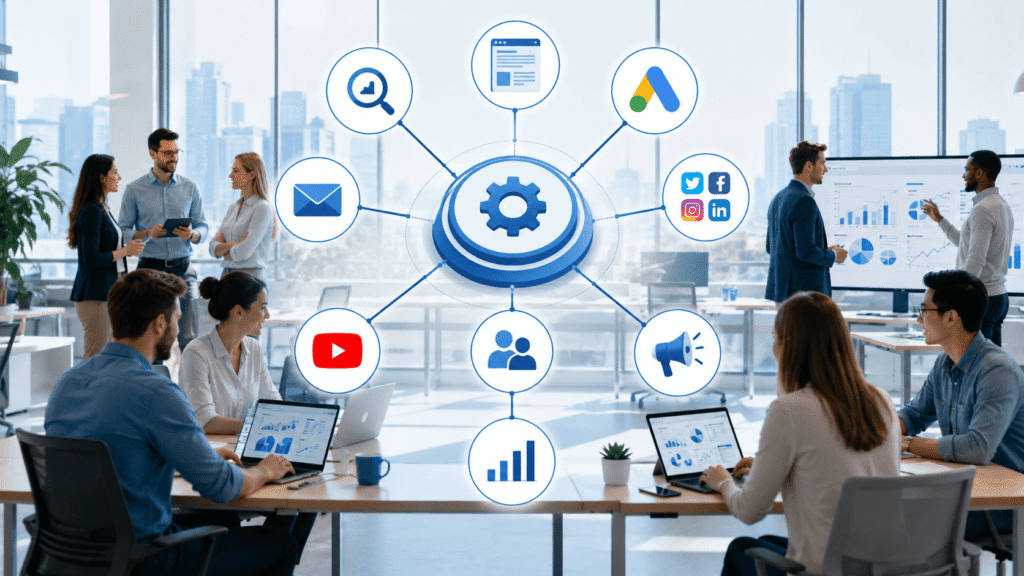
Instead of relying on occasional advertising campaigns or word-of-mouth referrals, successful businesses build repeatable systems that continuously bring in new customers. These systems combine SEO, content marketing, paid advertising, email marketing, social media, and marketing automation to create a reliable growth engine.
In this guide, you’ll learn how to build a scalable customer acquisition strategy that supports long-term success, lowers customer acquisition costs (CAC), and increases customer lifetime value (CLV).
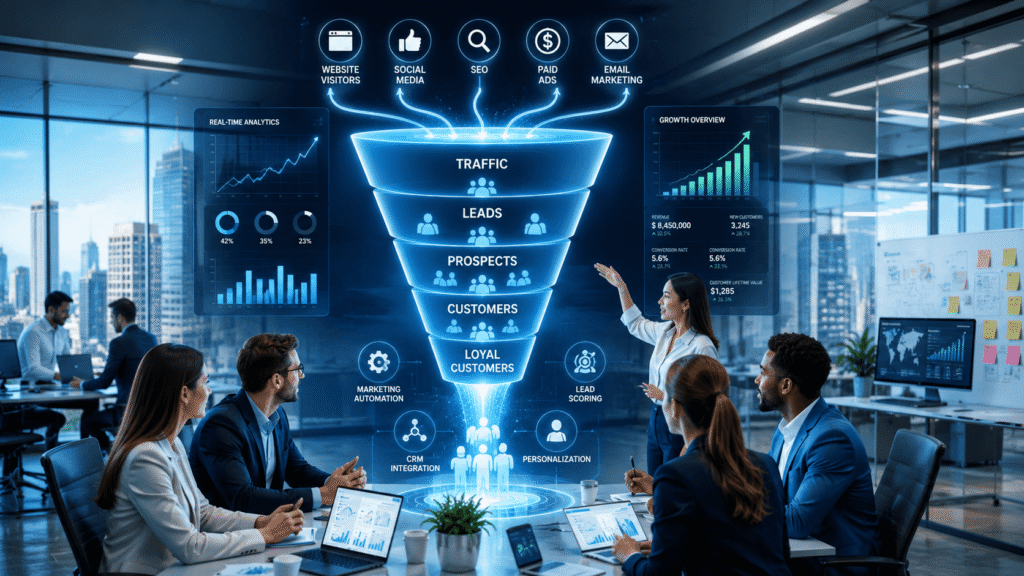
What Is Scalable Customer Acquisition?
Scalable customer acquisition is the process of consistently attracting and converting new customers while keeping marketing efforts efficient as your business grows. Rather than increasing your budget at the same rate as revenue, a scalable strategy allows your marketing system to generate more qualified leads through optimized processes and multiple acquisition channels.
A scalable customer acquisition strategy typically includes:
- Search Engine Optimization (SEO)
- Content Marketing
- Paid Advertising
- Email Marketing
- Social Media Marketing
- Marketing Automation
- Conversion Rate Optimization (CRO)
- Customer Retention
When these elements work together, they create a repeatable system that continues generating leads and sales over time.
Why Scalable Customer Acquisition Matters
Building scalable customer acquisition is essential for businesses that want predictable growth instead of depending on luck or seasonal demand.
Without a structured acquisition strategy, businesses often struggle with:
- Inconsistent sales
- Rising advertising costs
- Low-quality leads
- Poor conversion rates
- Slow business growth
- Revenue uncertainty
A scalable customer acquisition system solves these challenges by creating consistent demand and improving every stage of the customer journey.
Benefits of Scalable Customer Acquisition
Businesses that invest in scalable customer acquisition enjoy several long-term advantages.
- Lower customer acquisition costs
- Higher conversion rates
- More predictable monthly revenue
- Better customer retention
- Increased brand awareness
- Improved marketing efficiency
- Sustainable long-term growth
Instead of constantly searching for new ways to generate sales, your marketing system works continuously to attract qualified prospects.
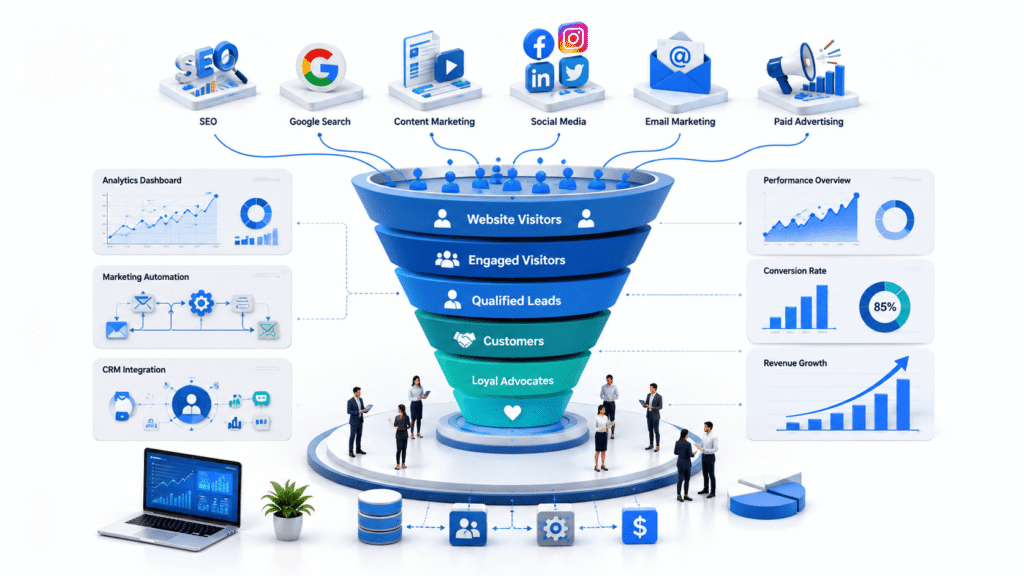
The Four Stages of Scalable Customer Acquisition
Every successful acquisition strategy follows four essential stages.
Stage 1: Attract Qualified Visitors
The first step in scalable customer acquisition is attracting people who are actively looking for your products or services.
Focus on high-intent traffic sources such as:
- Organic search
- Google Ads
- YouTube
- Referral marketing
- Industry partnerships
- Online communities
Quality traffic always performs better than large volumes of untargeted visitors.
Stage 2: Convert Visitors into Leads
Traffic alone doesn’t grow a business.
Your website should encourage visitors to take action by offering valuable resources.
Popular lead magnets include:
- Free eBooks
- Checklists
- Templates
- Product demos
- Free consultations
- Webinars
- Email newsletters
- Discount offers
A simple landing page with a clear call to action can significantly improve conversion rates.
Stage 3: Nurture Potential Customers
Most people don’t buy during their first visit.
That’s why scalable customer acquisition depends heavily on lead nurturing.
Effective nurturing includes:
- Educational email sequences
- Customer success stories
- Product tutorials
- Personalized recommendations
- Retargeting campaigns
- Helpful blog content
Building trust over time increases the likelihood of conversion.
Stage 4: Convert Leads into Customers
After building trust, prospects are ready to make a purchase.
Remove as much friction as possible by offering:
- Transparent pricing
- Customer reviews
- Testimonials
- Money-back guarantees
- Live chat support
- Simple checkout experiences
The easier you make the buying process, the higher your conversion rate.
Build an Ideal Customer Profile for Scalable Customer Acquisition
Every successful scalable customer acquisition strategy begins with understanding your audience.
Trying to market to everyone usually results in lower conversions and wasted advertising spend.
Instead, develop a detailed Ideal Customer Profile (ICP).
Define Customer Demographics
Start with basic information such as:
- Age
- Gender
- Location
- Income
- Education
- Occupation
- Industry
This information helps you target marketing campaigns more effectively.
Understand Customer Pain Points
Your audience is searching for solutions—not products.
Ask questions like:
- What problems do they face?
- What goals are they trying to achieve?
- What frustrations do they experience?
- Why haven’t existing solutions worked?
Answering these questions helps you create content that resonates with potential customers.
Identify Buying Behavior
Understanding how customers make purchasing decisions improves marketing performance.
Research:
- Where they spend time online
- Which social media platforms they use
- What influences purchasing decisions
- Common objections before buying
- Preferred communication channels
The better you understand customer behavior, the easier it becomes to create personalized marketing campaigns.
Best Marketing Channels for Scalable Customer Acquisition
Diversification is one of the biggest strengths of scalable customer acquisition.
Instead of relying on one source of traffic, build multiple channels that work together.
Search Engine Optimization (SEO)
SEO remains one of the highest-return marketing investments because it delivers long-term organic traffic.
Benefits include:
- Evergreen website traffic
- Higher search visibility
- Increased credibility
- Lower acquisition costs
- Better lead quality
Focus on:
- Keyword research
- Technical SEO
- Internal linking
- High-quality content
- Link building
Content Marketing
Content marketing supports scalable customer acquisition by educating prospects before they make purchasing decisions.
Effective content formats include:
- Blog articles
- Videos
- Case studies
- White papers
- Infographics
- Podcasts
- Industry reports
- Comparison guides
Helpful content builds trust while improving search engine rankings.
Email Marketing
Email marketing continues to deliver one of the highest returns on investment among digital marketing channels.
Instead of sending only promotional emails, create automated sequences that educate subscribers and guide them toward making a purchase.
Examples include:
- Welcome emails
- Product education
- Weekly newsletters
- Customer onboarding
- Re-engagement campaigns
- Abandoned cart emails
Marketing automation allows these campaigns to run continuously with minimal manual effort.
Paid Advertising
Paid advertising helps businesses scale more quickly while organic marketing efforts continue to grow.
Popular platforms include:
- Google Ads
- Meta Ads
- LinkedIn Ads
- Microsoft Ads
- YouTube Ads
- TikTok Ads
Always monitor key performance indicators such as:
- Cost Per Click (CPC)
- Customer Acquisition Cost (CAC)
- Return on Ad Spend (ROAS)
- Conversion Rate
- Click-Through Rate (CTR)
Scale campaigns only after they consistently generate profitable results.
Essential Metrics for Scalable Customer Acquisition
Key Performance Metrics to Track
Measuring performance is critical for long-term success. Track these key performance indicators (KPIs) regularly:
Swipe or scroll sideways to read all columns.
| Metric | Why It Matters |
|---|---|
| Customer Acquisition Cost (CAC) | Measures how much it costs to acquire one customer. |
| Customer Lifetime Value (CLV) | Shows the total revenue a customer generates over time. |
| Conversion Rate | Indicates how effectively visitors become customers. |
| Cost Per Lead (CPL) | Measures lead generation efficiency. |
| Return on Ad Spend (ROAS) | Evaluates paid advertising profitability. |
| Click-Through Rate (CTR) | Measures engagement with ads and emails. |
| Churn Rate | Tracks how many customers stop using your product or service. |
| Lead-to-Customer Rate | Measures sales effectiveness from qualified leads. |
Monitoring these metrics helps identify opportunities for improvement and supports smarter marketing decisions.
Scalable Customer Acquisition Through High-Converting Marketing Funnels
A well-designed funnel is the backbone of scalable customer acquisition. Without a structured process, businesses lose potential customers at every stage of the buying journey.
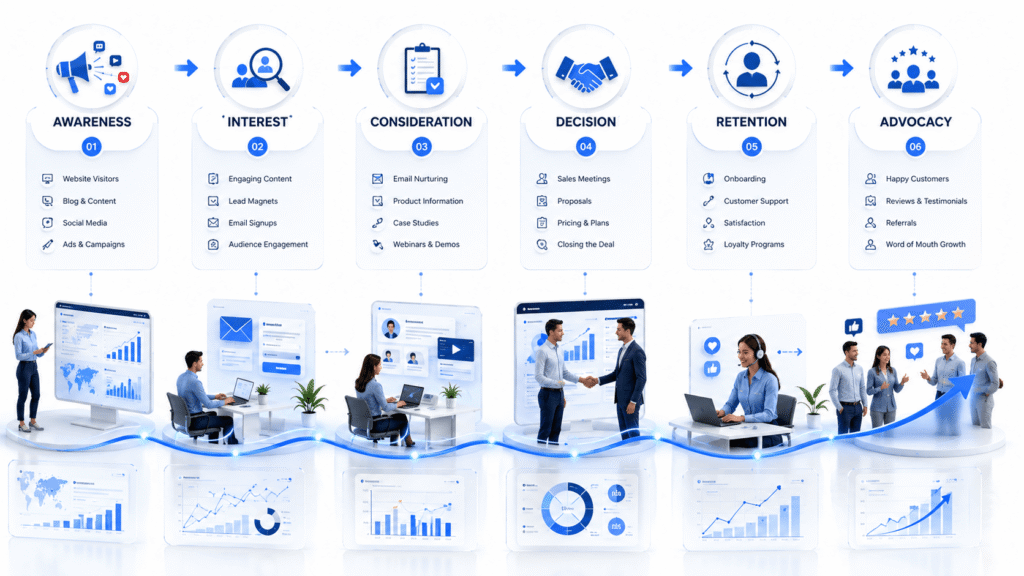
A marketing funnel guides prospects from discovering your brand to becoming loyal customers. Each stage should provide the right message, content, and call to action.
A typical funnel includes:
- Awareness
- Interest
- Consideration
- Decision
- Retention
- Advocacy
Businesses that optimize every stage of the funnel consistently generate more leads and increase conversion rates.
Build Awareness for Scalable Customer Acquisition
The awareness stage introduces your business to potential customers who may not know your brand.
Your goal is to educate rather than sell.
Effective awareness channels include:
- SEO blog posts
- YouTube videos
- Social media content
- Podcasts
- Guest blogging
- Digital PR
- Influencer partnerships
Creating valuable content around customer problems builds trust and increases brand visibility.
Convert Visitors into Qualified Leads
Once people discover your business, encourage them to take the next step.
High-performing lead generation offers include:
- Free eBooks
- Industry reports
- Checklists
- Templates
- Webinars
- Free tools
- Product demos
- Email newsletters
Keep your forms simple by asking only for essential information. Fewer form fields often lead to higher conversion rates.
Nurture Leads for Scalable Customer Acquisition
Not every lead is ready to buy immediately. Lead nurturing helps build trust until prospects are ready to make a purchasing decision.
An effective nurturing strategy includes:
- Educational emails
- Product tutorials
- Customer success stories
- Case studies
- Frequently asked questions
- Personalized recommendations
- Retargeting ads
Consistent communication keeps your brand top of mind and increases the likelihood of conversion.
Use Marketing Automation for Scalable Customer Acquisition
Marketing automation allows businesses to communicate with thousands of prospects without increasing manual work.
Automation saves time while delivering personalized experiences based on customer behavior.
Popular automation workflows include:
- Welcome email sequences
- Lead nurturing campaigns
- Abandoned cart reminders
- Appointment reminders
- Product recommendations
- Customer onboarding
- Renewal notifications
- Win-back campaigns
Automation ensures every lead receives timely communication throughout the customer journey.
Best Marketing Automation Tools
Several platforms simplify marketing automation and improve customer engagement.
Popular options include:
- HubSpot
- ActiveCampaign
- Mailchimp
- Klaviyo
- Salesforce Marketing Cloud
- Brevo (formerly Sendinblue)
Choose a platform based on your business size, budget, and automation needs.
Improve Scalable Customer Acquisition with Conversion Rate Optimization (CRO)
Increasing website traffic is only part of the equation. Improving conversions allows you to generate more customers without increasing your marketing budget.
Conversion Rate Optimization (CRO) focuses on improving user experience and encouraging visitors to take action.
Simple improvements can have a significant impact on conversions.
Optimize Landing Pages
Landing pages should have one clear goal.
Best practices include:
- Compelling headlines
- Strong value propositions
- Clear calls to action
- Customer testimonials
- Trust badges
- Fast loading speeds
- Mobile-friendly design
- Minimal distractions
Every element should encourage visitors to complete the desired action.
Test Everything
A/B testing helps identify which changes improve performance.
Test variables such as:
- Headlines
- CTA button colors
- Images
- Page layouts
- Pricing displays
- Email subject lines
- Form lengths
Small improvements can lead to substantial increases in conversions over time.
Use Artificial Intelligence for Scalable Customer Acquisition
Artificial Intelligence (AI) has transformed digital marketing by helping businesses automate repetitive tasks and personalize customer experiences.
AI supports scalable customer acquisition by improving efficiency and enabling data-driven decisions.
Common AI applications include:
- Content creation
- Customer segmentation
- Predictive analytics
- Chatbots
- Email personalization
- Lead scoring
- Ad optimization
- Customer support
Businesses that adopt AI responsibly can improve productivity while delivering better customer experiences.
Personalize Customer Experiences
Modern consumers expect personalized interactions.
Use customer data to recommend:
- Relevant products
- Helpful blog posts
- Personalized emails
- Special offers
- Recommended services
Personalization increases engagement and strengthens customer relationships.

Align Sales and Marketing Teams
Sales and marketing should work toward the same business goals.
Poor communication between these departments often results in lost opportunities and inconsistent messaging.
Successful businesses align both teams by:
- Defining shared goals
- Agreeing on lead qualification criteria
- Sharing customer insights
- Tracking common KPIs
- Holding regular strategy meetings
Better alignment improves lead quality and increases sales efficiency.
Build Customer Retention into Scalable Customer Acquisition
Acquiring new customers is important, but retaining existing customers is often more profitable.
Loyal customers tend to:
- Spend more
- Buy more frequently
- Recommend your business
- Leave positive reviews
- Reduce overall acquisition costs
Retention should be part of every scalable customer acquisition strategy.
Encourage Repeat Purchases
Increase customer lifetime value by offering:
- Loyalty programs
- Personalized recommendations
- Exclusive discounts
- Membership benefits
- Referral rewards
- Educational resources
Satisfied customers become valuable advocates for your brand.
Budget for Scalable Customer Acquisition
Suggested Marketing Budget Allocation
Every business should have a clear marketing budget aligned with its growth objectives.
Rather than spending equally across every channel, invest more in strategies that deliver the highest return.
Swipe or scroll sideways to read all columns.
| Marketing Channel | Suggested Budget Allocation |
|---|---|
| SEO | 25% |
| Content Marketing | 20% |
| Paid Advertising | 30% |
| Email Marketing | 10% |
| Social Media | 10% |
| Testing and Optimization | 5% |
Review your budget regularly and adjust spending based on campaign performance.
Common Mistakes That Limit Scalable Customer Acquisition
Even well-funded businesses can struggle if they overlook the fundamentals.
- Relying on a single marketing channel.
- Ignoring SEO.
- Publishing inconsistent content.
- Failing to nurture leads.
- Not tracking performance metrics.
- Sending generic marketing messages.
- Neglecting mobile optimization.
- Scaling campaigns before they are profitable.
- Ignoring customer feedback.
- Overlooking customer retention.
Addressing these issues early helps build a stronger and more sustainable acquisition strategy.
Real-World Examples of Scalable Customer Acquisition
Learning from successful companies can help you build a stronger scalable customer acquisition strategy. While every business is different, the principles behind sustainable growth remain the same.
HubSpot’s Content Marketing Strategy
HubSpot built its reputation by publishing high-quality educational content that answers customer questions. Instead of focusing only on product promotion, the company creates blog posts, templates, courses, and free tools that attract millions of visitors through organic search.
Key lessons include:
- Create content that solves real problems.
- Target high-intent keywords.
- Offer valuable free resources.
- Build trust before selling.
- Use email marketing to nurture leads.
This approach turns website visitors into qualified leads while reducing long-term acquisition costs.
Shopify’s SEO and Educational Resources
Shopify has become a leader in eCommerce by investing heavily in SEO and educational content. Its blog, business guides, and free tools help entrepreneurs start and grow online stores.
The company’s strategy focuses on:
- Comprehensive keyword research
- Beginner-friendly content
- Free business tools
- Product education
- Strong internal linking
By helping users succeed before they become customers, Shopify builds trust and generates consistent organic traffic.
Amazon’s Customer-Centric Growth
Amazon continues to improve scalable customer acquisition by focusing on customer experience.
Its success comes from:
- Personalized product recommendations
- Fast shipping
- Customer reviews
- Competitive pricing
- Simple checkout
- Excellent customer support
These features improve customer satisfaction and encourage repeat purchases, lowering the overall cost of acquiring new customers.

Advanced Strategies for Scalable Customer Acquisition
Once your acquisition system delivers consistent results, you can focus on scaling it further.
Expand Into New Marketing Channels
Diversifying traffic sources reduces risk and increases growth opportunities.
Consider adding:
- Podcast marketing
- Affiliate marketing
- YouTube
- LinkedIn newsletters
- Influencer collaborations
- Community marketing
- Webinar partnerships
Multiple acquisition channels create a more resilient marketing strategy.
Invest in Customer Referrals
Referral marketing is one of the most cost-effective ways to achieve scalable customer acquisition.
Encourage satisfied customers to recommend your business by offering:
- Referral bonuses
- Store credits
- Exclusive discounts
- Loyalty rewards
- VIP memberships
Word-of-mouth marketing often generates highly qualified leads with lower acquisition costs.
Continue Testing and Optimizing
Successful businesses never stop improving.
Regularly review:
- Website performance
- Conversion rates
- Landing pages
- Email campaigns
- Advertising creatives
- Customer feedback
- Sales processes
Continuous optimization ensures your acquisition engine becomes more efficient over time.
Best Practices for Scalable Customer Acquisition
Following proven best practices helps create sustainable growth.
- Focus on solving customer problems.
- Publish high-quality content consistently.
- Diversify traffic sources.
- Invest in SEO for long-term visibility.
- Use marketing automation to save time.
- Personalize customer experiences.
- Track performance metrics regularly.
- Test campaigns before scaling.
- Improve customer retention.
- Build long-term relationships instead of chasing short-term sales.
These practices create a strong foundation for long-term success.
Frequently Asked Questions
What is scalable customer acquisition?
Scalable customer acquisition is the process of consistently gaining new customers through repeatable marketing systems that continue to perform as a business grows.
Why is scalable customer acquisition important?
It helps businesses generate predictable revenue, reduce customer acquisition costs, improve conversion rates, and support sustainable long-term growth.
Which marketing channel is best for scalable customer acquisition?
There is no single best channel. A combination of SEO, content marketing, email marketing, paid advertising, social media, and marketing automation usually delivers the strongest long-term results.
How can small businesses build scalable customer acquisition?
Small businesses should begin by identifying their ideal audience, creating valuable content, optimizing their website for search engines, building an email list, and measuring marketing performance to improve results over time.
Which metrics should businesses track?
Important metrics include:
- Customer Acquisition Cost (CAC)
- Customer Lifetime Value (CLV)
- Conversion Rate
- Cost Per Lead (CPL)
- Return on Ad Spend (ROAS)
- Click-Through Rate (CTR)
- Customer Retention Rate
These metrics help evaluate marketing performance and identify opportunities for improvement.
Conclusion
Building scalable customer acquisition is not about finding a single marketing tactic that delivers instant success. Instead, it requires creating a repeatable system that consistently attracts qualified prospects, nurtures relationships, converts leads into customers, and encourages long-term loyalty.
Businesses that invest in SEO, content marketing, marketing automation, conversion optimization, and customer retention create sustainable growth engines that continue to perform even as competition increases. By measuring key performance indicators, testing new ideas, and continuously improving the customer experience, companies can reduce acquisition costs while increasing revenue and profitability.
Whether you’re launching a startup or scaling an established business, a well-designed customer acquisition strategy provides the foundation for predictable growth and long-term success.
