

Automation
Marketing automation for small businesses should make your marketing simpler, not heavier. When it is done well, it handles the repetitive work that slows small teams down: follow-up emails, lead routing, nurture sequences, reminders, tagging, and reporting triggers. When it is done badly, it creates noise, confusing workflows, and messages nobody wants to receive.
Quick answer: Marketing automation for small businesses is the use of software and workflows to handle repeatable marketing tasks like follow-up, segmentation, and reporting. The best automation systems are simple, tied to real customer behavior, and designed to support better timing, relevance, and efficiency.
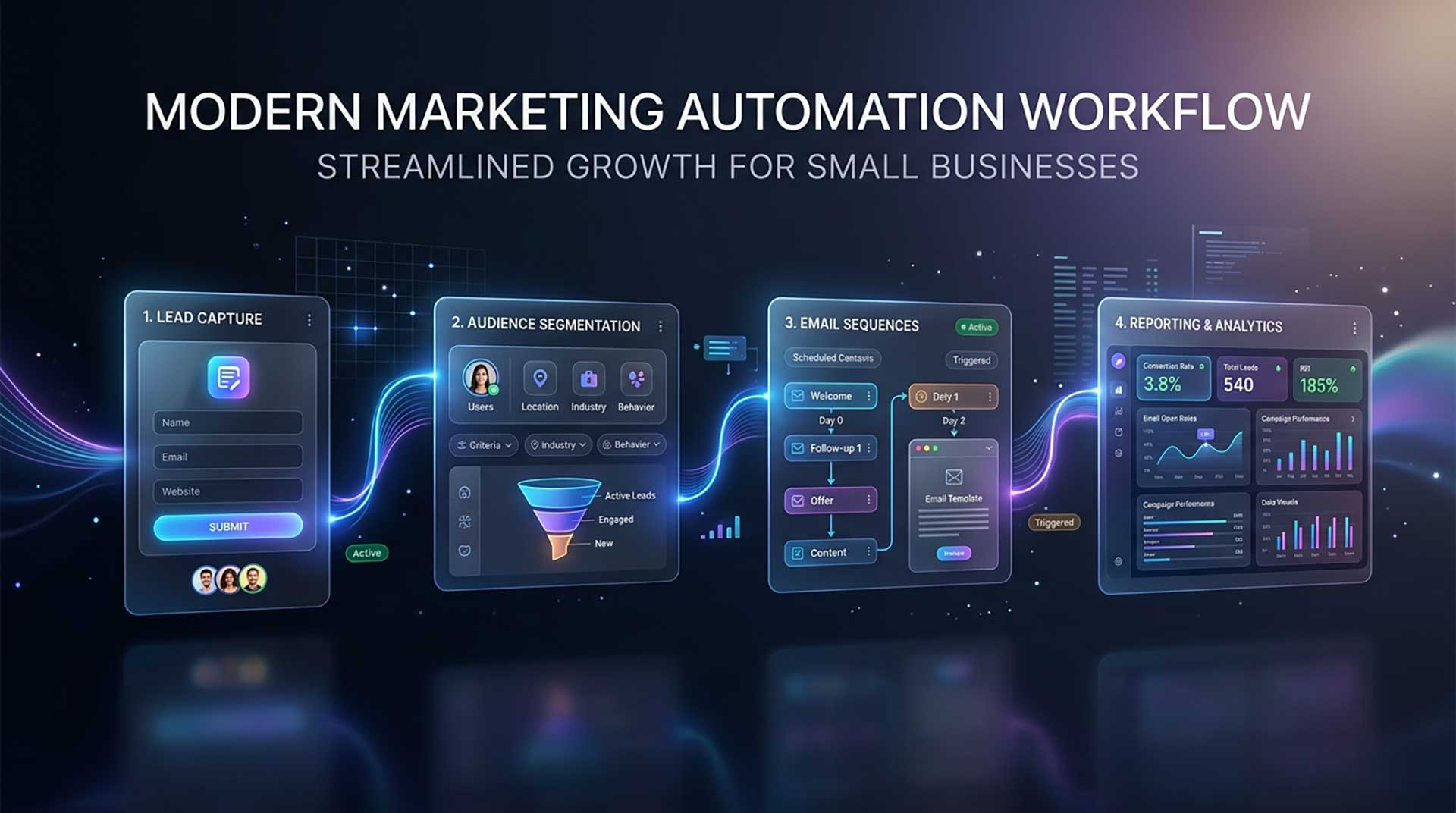
Why Marketing Automation for Small Businesses Matters
Small businesses often lose opportunities not because the offer is weak, but because follow-up is inconsistent. Leads come in, questions get answered slowly, repeat buyers receive generic emails, and reporting stays reactive. Automation helps close those gaps by making sure the next step happens even when the team is busy.
It also creates consistency. A clear workflow makes it easier to nurture leads, onboard customers, and deliver timely reminders without relying on memory. When combined with AI marketing for small businesses, automation can become even more useful by improving personalization, summarization, and decision support.
What Marketing Automation for Small Businesses Should Handle First
The best starting points are usually simple: welcome emails, lead capture follow-up, abandoned cart or inquiry reminders, appointment confirmations, customer reactivation, and lifecycle segmentation. These are high-value, repeatable moments where speed and consistency matter.
How to Build Better Automation Without Overcomplicating It
Start With One Journey, Not Ten
Pick one customer journey that already happens often and already has friction. For example, someone downloads a guide but never hears from you again, or someone requests a quote but follow-up depends on manual reminders. Fixing one journey well is better than building ten weak automations that nobody maintains.
Trigger Workflows With Real Signals
Strong automation depends on useful inputs. Good triggers include form submissions, page visits, cart activity, purchases, inactivity windows, or CRM stage changes. That is one reason automation becomes stronger when supported by a better content marketing strategy and clean analytics. If the inputs are fuzzy, the automation will feel fuzzy too.
Keep the Message Human
Automation should not sound automated. Shorter emails, clearer next steps, and timely relevance matter more than complex branching logic. This is also where a good understanding of SEO for marketers can support better workflows. Pages that attract the right traffic make automation more effective because the leads entering the funnel are already better matched.
Common Automation Mistakes
- Automating low-value tasks before fixing broken customer journeys.
- Writing long, generic sequences that feel robotic.
- Using too many tools with overlapping functions.
- Skipping testing and assuming workflows are firing correctly.
- Ignoring privacy, consent, or preference settings.
Privacy matters here as much as efficiency. If your workflows rely on behavioral signals, review resources such as Google Analytics guidance on Consent Mode. For practical workflow examples, tools like HubSpot’s marketing automation resources can also help teams think more clearly about sequencing and lifecycle design.
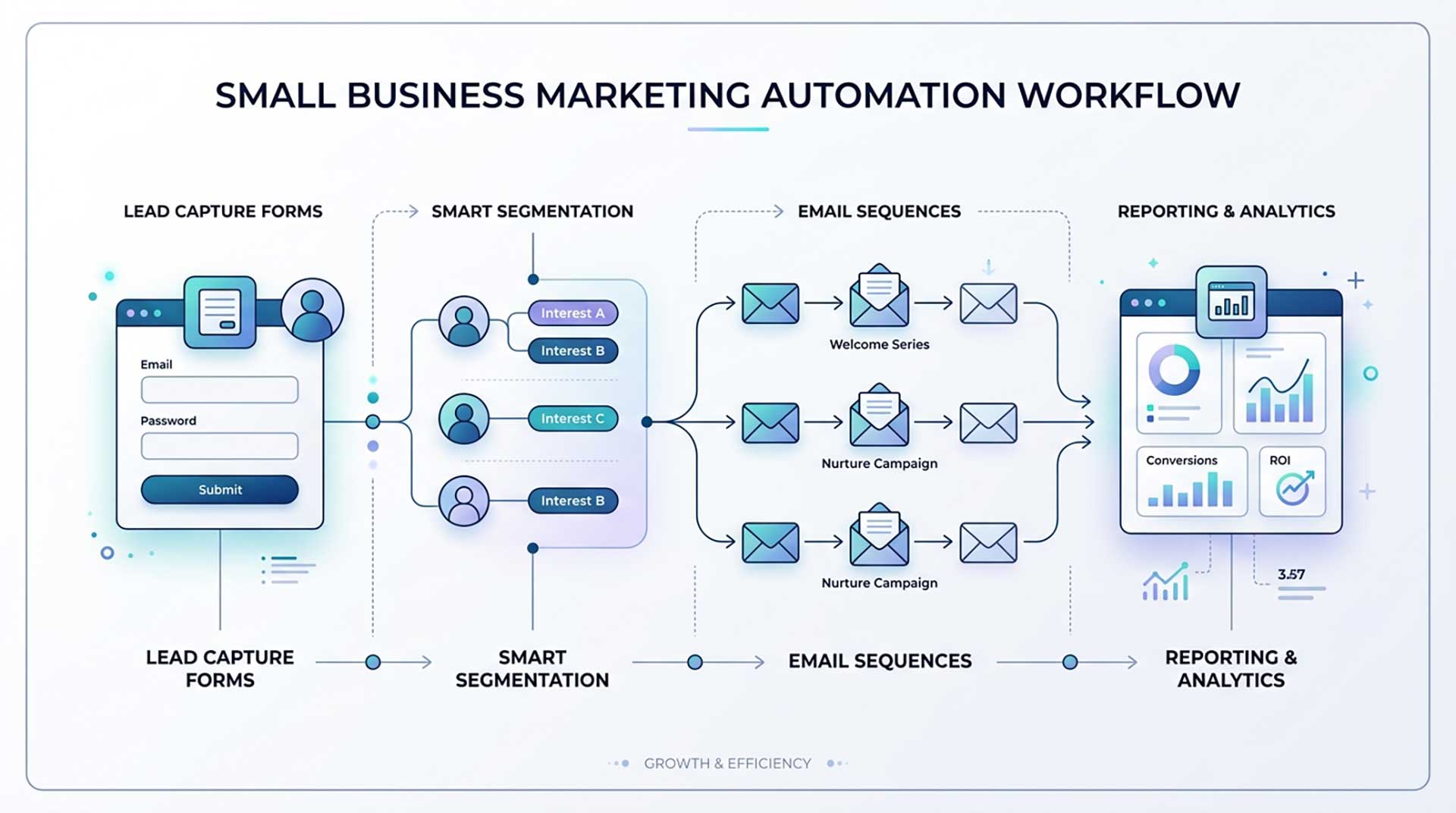
Quick Wins for Faster Automation Results
Marketing Automation for Small Businesses Quick Wins
- Build a welcome sequence for new subscribers or leads.
- Create one follow-up path for abandoned inquiries or carts.
- Add lead source tags that flow into your CRM automatically.
- Review old automations and remove anything outdated or redundant.
- Set a monthly workflow check so broken sequences do not linger.
If you want one fast win, focus on the first follow-up after a lead or signup. That single moment often has the biggest effect on response rate and conversion quality.
Conclusion
Marketing automation for small businesses is most effective when it supports real customer journeys, not abstract tool ambitions. Start with one process, keep the message useful, and build from signals that actually matter. The result is less manual work, better timing, and a more reliable growth system.
