

AI Marketing
AI marketing for small businesses is most useful when it solves a real bottleneck. The goal is not to automate everything or sound futuristic. It is to save time, improve decisions, and help a lean team produce better content, sharper targeting, and more consistent follow-up without losing its brand voice.
Quick answer: AI marketing for small businesses means using AI tools to improve research, content creation, segmentation, campaign testing, and reporting. The best results usually come from combining automation with human review, strong brand guidelines, and a clear strategy for SEO, email, and customer journeys.
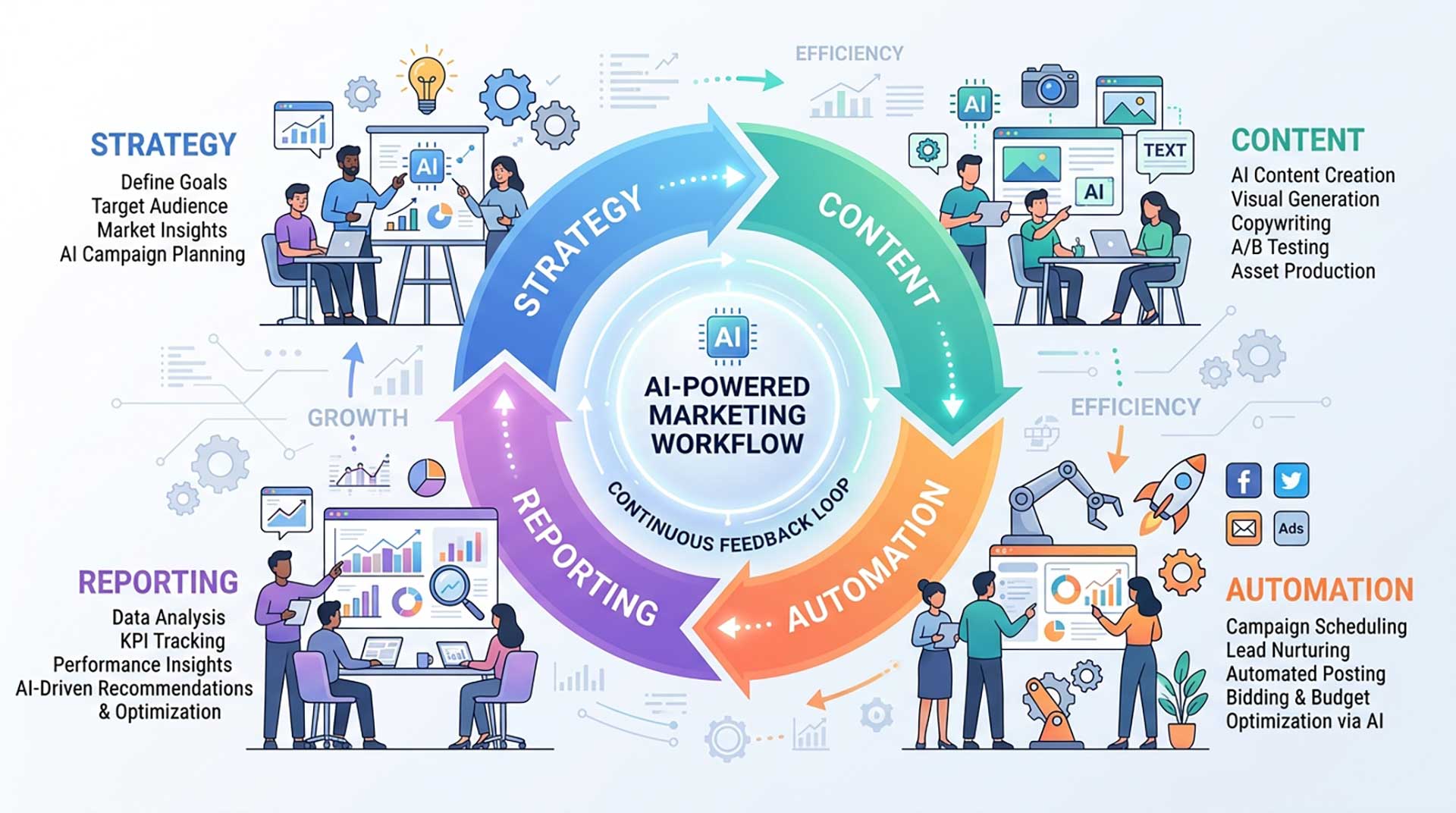
Why AI Marketing for Small Businesses Matters
Small teams rarely have the luxury of endless time, budget, or specialist support. That is why AI can become a practical edge. It can help marketers summarize research, speed up repetitive tasks, surface patterns in campaign data, and generate first drafts that are easier to refine than to create from scratch.
The key is using it in the right places. AI should support your workflow, not define your strategy. If your positioning is fuzzy, your data is messy, or your offers are unclear, automation will only make weak marketing faster. Google’s guidance on using AI-generated content responsibly is still a good reminder that helpfulness matters more than the tool used to produce it.
What AI Marketing for Small Businesses Looks Like in Practice
At a basic level, AI can help with topic ideation, email drafts, audience summaries, reporting insights, campaign variations, and workflow automation. But the strongest wins usually come from combining those tasks into one connected system. For example, research insights can feed a better content marketing strategy, which then supports SEO, which then feeds smarter nurture campaigns.
How to Use AI Without Making Your Marketing Worse
Start With One High-Value Use Case
Do not begin by buying five tools. Start with one job that already takes too much time. Maybe it is briefing blog posts, turning webinar notes into email sequences, summarizing lead call patterns, or building simple reporting dashboards. The best use case is one where the output still gets reviewed by a human but the time savings are obvious.
Pair AI With Good Inputs
AI output is only as useful as the material behind it. Give it brand guidelines, customer pain points, winning page examples, and clear conversion goals. If your site already has a stronger foundation in SEO for marketers, AI can help you scale the right work faster rather than multiply generic content.
Connect AI to Automation, Not Just Content
One mistake teams make is using AI only for writing. In reality, it can be just as helpful in workflows. Think lead routing, CRM notes, email personalization, support summaries, or turning form responses into cleaner audience segments. That is where a structured guide on marketing automation for small businesses becomes valuable, because AI is often strongest when paired with a process that already exists.
Common AI Marketing Mistakes
- Publishing AI-written content without editing it for clarity or originality.
- Using too many tools before defining the actual workflow problem.
- Letting automation shape the message instead of the brand strategy.
- Ignoring compliance, privacy, or customer expectations around data use.
- Assuming speed automatically leads to better marketing.
A useful mental rule is simple: automate the repeatable, review the strategic, and protect the human parts that shape trust.
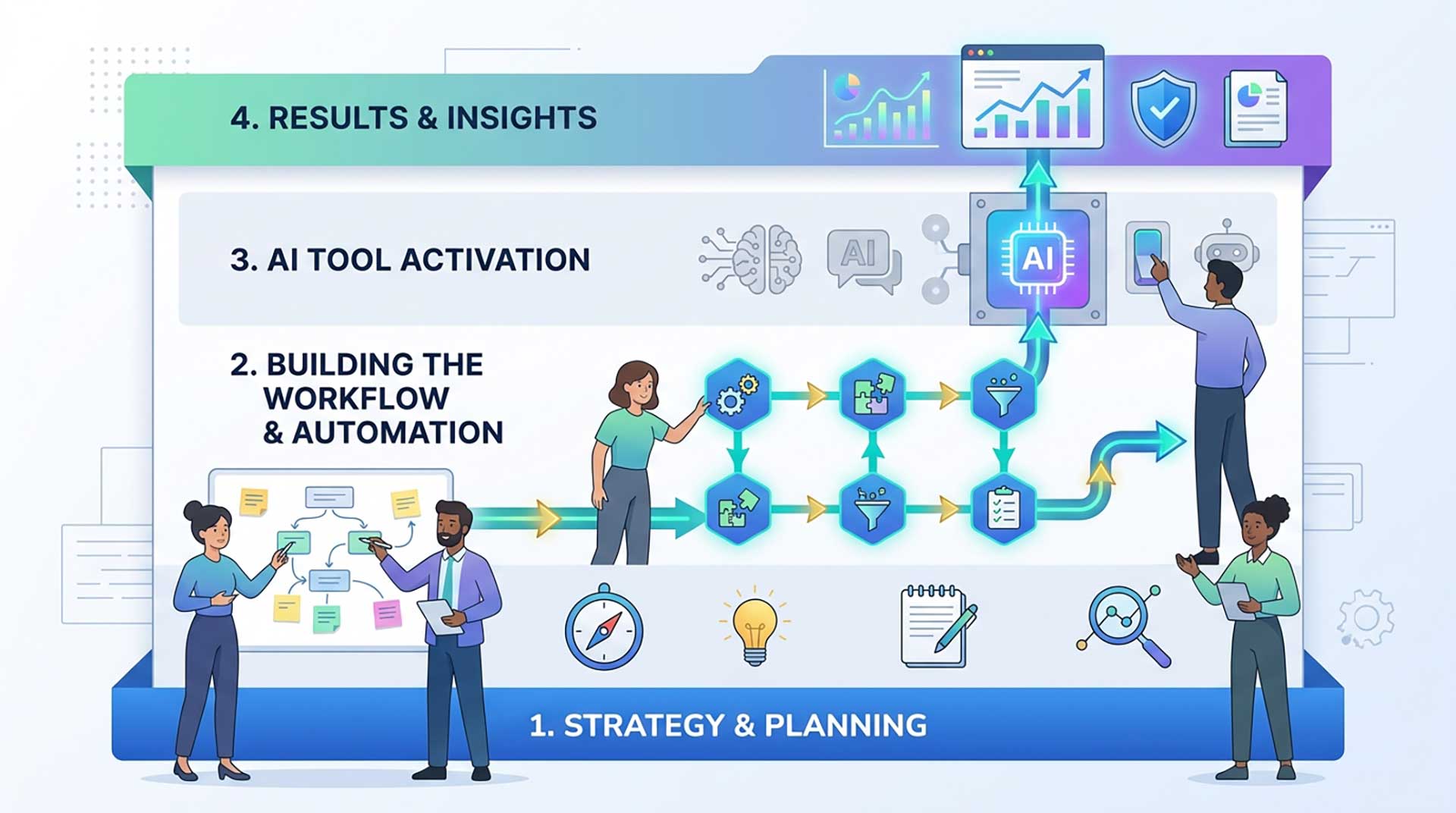
Quick Wins You Can Implement This Week
AI Marketing for Small Businesses Quick Wins
- Turn sales or support calls into a list of recurring customer questions.
- Use AI to draft article outlines, then refine them with real examples.
- Generate email subject line variations for one nurture sequence.
- Summarize campaign reports into short action lists for the team.
- Create reusable prompt templates for common content tasks.
If you want faster gains, use AI where the decision criteria are already clear. That keeps quality high and risk low.
For broader industry examples and experimentation ideas, Think with Google is also worth monitoring.
Conclusion
AI marketing for small businesses works best when it supports sharper strategy, cleaner execution, and better use of limited time. It should make your marketing more useful, not more generic. Start small, document what works, and build the system around real outcomes.
