

Blogging
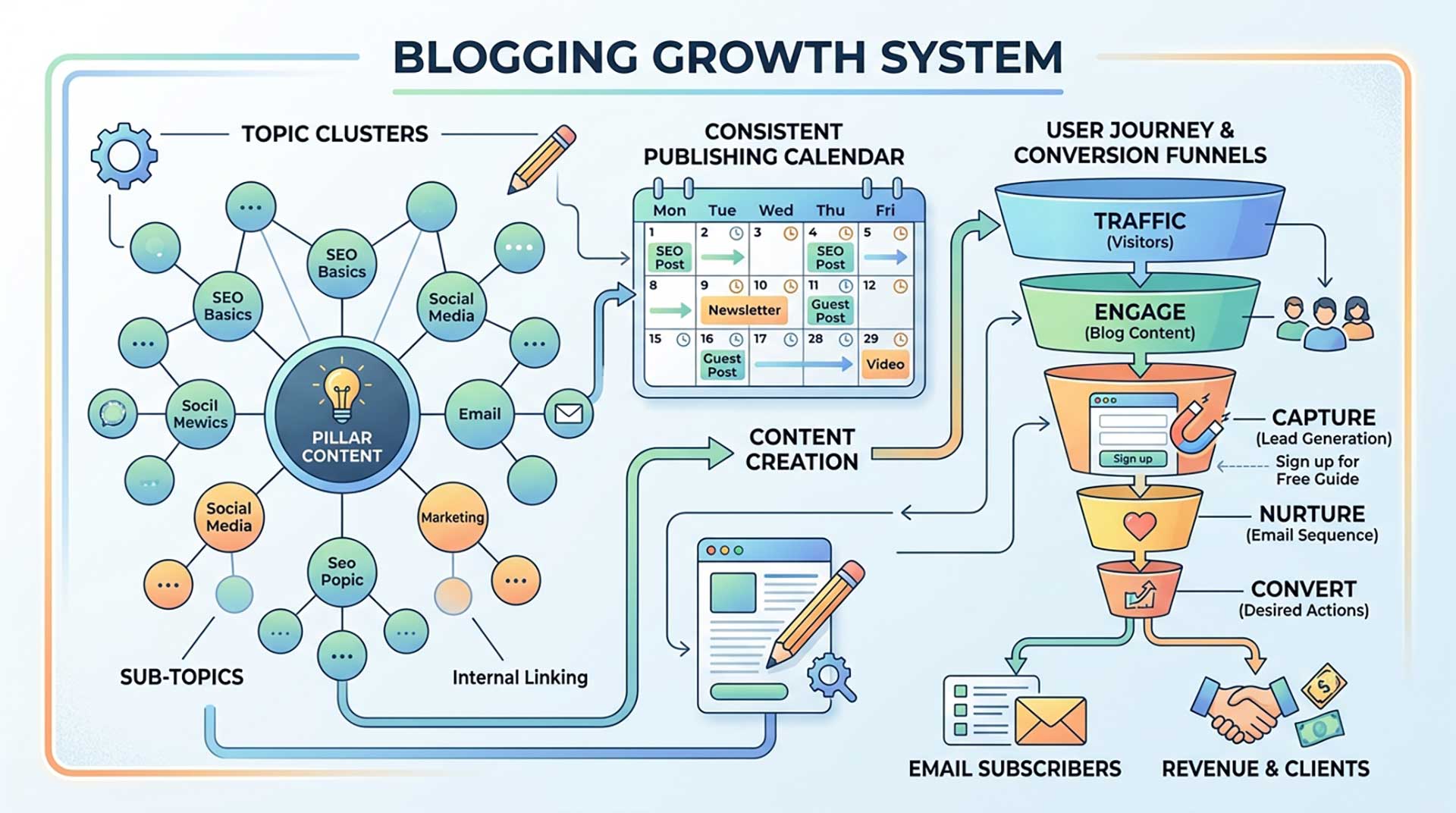
A blogging strategy for growth is about more than publishing often. The best blogs build momentum because every post has a job: attract search demand, answer a real question, strengthen authority, or move the reader closer to a conversion. When those goals are clear, blogging becomes an asset instead of a content treadmill.
Quick answer: A blogging strategy for growth connects topic selection, search intent, content structure, internal linking, and conversion paths. Instead of writing random posts, you build around a few core themes, publish consistently, and use each article to support the next stage of the reader journey.
Why a Blogging Strategy for Growth Works
Blogging still works because it helps brands show up at the exact moment people are searching for answers. A single post may educate a reader, but a connected set of posts can build trust over time, support multiple search intents, and create a more scalable traffic engine. That is why a smart blog often supports both discovery and revenue better than sporadic campaign content.
However, volume alone is not a strategy. If your posts are disconnected, repetitive, or aimed at the wrong audience, growth stays slow. The stronger approach is to pair blogging with a clear content marketing strategy and a practical understanding of SEO for marketers so each post fits into a larger system.
What a Blogging Strategy for Growth Should Include
A useful strategy needs a clear audience, a small set of content pillars, realistic publishing cadence, and a plan for internal linking and conversion. It should also distinguish between articles that build awareness, articles that build trust, and articles that support commercial action. Without that mix, even good writing can feel directionless.
How to Build a Blog That Actually Compounds
Choose a Few Core Themes
Start with three to five areas you want the site to be known for. Those pillars should sit at the intersection of audience demand, brand relevance, and monetization potential. Once the pillars are clear, it becomes easier to create topic clusters instead of isolated ideas.
Match Posts to Real Search Behavior
Not every post needs to chase a huge keyword, but every strong post should have a clear reason to exist. What question is it answering? What stage of the journey does it support? Which related article should it link to next? You can even strengthen the system by weaving in adjacent topics like AI marketing for small businesses when they genuinely help the reader move forward.
Design Posts for Reading and Conversion
Use clear subheadings, short paragraphs, useful examples, and one obvious next step. A blog post does not need aggressive CTAs, but it should guide the reader somewhere meaningful. That might be another post, a newsletter signup, a downloadable resource, or a contact page. Helpful content guidance from Google Search Central still points in the same direction: create content for people first, then make it easy to discover.
Common Blogging Mistakes
- Publishing ideas based on inspiration instead of audience demand.
- Targeting too many unrelated topics on one site.
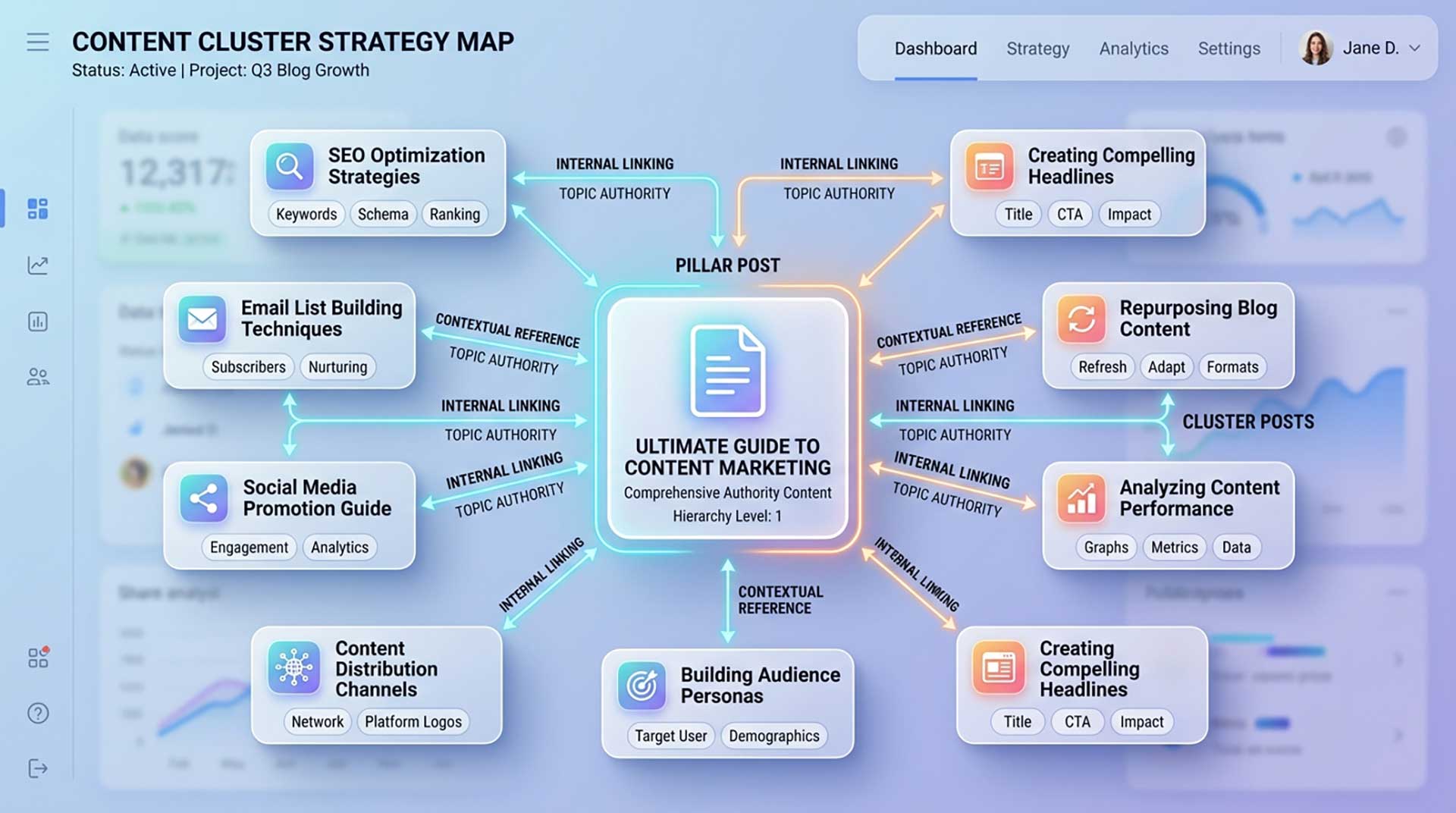
- Ignoring internal links and leaving good posts disconnected.
- Writing for traffic but forgetting newsletter or lead capture.
- Using long intros that delay the answer readers came for.
Another common issue is weak formatting. Posts that are hard to scan usually underperform even if the ideas are solid. Research on scannable webpages from Nielsen Norman Group reinforces how important structure is for digital reading.
Quick Wins for Better Blog Performance
Blogging Strategy for Growth Quick Wins
- Refresh older posts that already attract some search traffic.
- Add “read next” internal links at the end of each article.
- Turn one big topic into a three-post mini cluster.
- Improve intros so the main answer appears in the first paragraph.
- Review every post for one clear conversion path.
Sometimes the fastest way to grow a blog is not to publish more. It is to make the posts you already have easier to understand, easier to navigate, and more aligned with what readers want next.
Conclusion
A blogging strategy for growth works when the blog stops being a collection of posts and starts acting like a system. Clear themes, useful content, search visibility, and smart internal links create momentum over time. That is how blogging becomes a long-term growth asset instead of an endless task list.
