

In today’s competitive business landscape, growth is no longer determined solely by the size of a company’s marketing team. Instead, businesses that build scalable marketing systems can generate leads, nurture prospects, and drive revenue consistently without requiring constant supervision. Whether you’re a startup founder, marketing manager, or business owner, creating systems that operate efficiently in the background is essential for sustainable growth.
According to recent industry reports, companies that automate marketing processes generate significantly more qualified leads while reducing operational costs. However, scalability is not just about automation. It involves creating repeatable processes, leveraging technology, using data effectively, and building workflows that can handle increased demand without sacrificing quality.
This comprehensive guide explains how to build scalable marketing systems that run with minimal oversight, helping your business grow faster, improve efficiency, and maximize return on investment (ROI).
What Are Scalable Marketing Systems?
Scalable marketing systems are structured frameworks, processes, and technologies designed to support growing marketing activity without requiring the same rate of increase in staff, time, or operational costs. They help businesses manage more leads, campaigns, customers, and content while maintaining efficiency, consistency, and performance.
Key Components of Scalable Marketing Systems
A strong scalable marketing system usually combines automation, centralized data, repeatable workflows, and performance tracking. Core components often include:
- Marketing automation: Automates repetitive tasks such as email sequences, lead nurturing, campaign triggers, and follow-ups.
- Customer relationship management (CRM): Centralizes customer data, interactions, lead stages, and sales activity.
- Content marketing workflows: Standardizes content planning, creation, approval, publishing, and distribution.
- Lead generation funnels: Creates repeatable pathways for attracting, capturing, qualifying, and converting prospects.
- Analytics and reporting dashboards: Tracks marketing KPIs, campaign performance, conversions, and return on investment.
- Customer segmentation systems: Groups audiences based on behaviour, interests, demographics, or lifecycle stage for more relevant messaging.
Why Scalable Marketing Systems Matter for Business Growth
As a business grows, manual marketing processes quickly become difficult to manage. Tasks such as sending emails, scheduling content, updating lead records, tracking campaign performance, and following up with prospects can consume significant time and create unnecessary bottlenecks.
Scalable marketing systems reduce this dependency on repetitive manual work by creating standardized and automated processes. As a result, marketing teams can handle higher campaign volumes and more customer interactions without sacrificing consistency or quality.
More importantly, scalability allows teams to spend less time on routine execution and more time on strategy, creative development, customer experience, testing, and growth opportunities.
The Business Case for Marketing Automation
The Cost of Manual Marketing Processes
Many businesses still depend on spreadsheets, manual follow-ups, and disconnected marketing tools. While these methods may work at a small scale, they often become inefficient as lead volume, campaigns, and customer interactions increase.
Without scalable processes in place, businesses may experience:
- Missed opportunities: Leads can fall through the cracks when follow-ups depend on manual action.
- Inconsistent customer experiences: Disconnected systems can create delays, duplicated messages, and uneven communication.
- Higher labour costs: Teams spend more time completing repetitive administrative tasks.
- Reduced productivity: Manual processes limit the time available for strategy, testing, and creative work.
- Slower business growth: Marketing operations become harder to manage as demand increases.
Key Benefits of Scalable Marketing Systems
Increased Marketing EfficiencyAutomation handles repetitive activities such as follow-ups, lead routing, email sequences, and campaign updates. This reduces manual workload and allows marketing teams to focus on higher-value tasks.
Improved Lead ConversionScalable marketing systems can deliver timely and relevant communication based on a prospect’s behaviour, interests, and stage in the customer journey. This helps businesses nurture leads more effectively and improve conversion opportunities.
Better Customer ExperienceConsistent messaging and coordinated customer interactions create a smoother experience across marketing channels. As a result, businesses can strengthen trust, improve engagement, and build longer-term customer relationships.
Lower Customer Acquisition CostsEfficient workflows help reduce wasted advertising spend, duplicated work, and unnecessary operational costs. Over time, this can improve marketing efficiency and generate a stronger return from each customer acquisition campaign.
Create Standard Operating Procedures (SOPs)
Before implementing automation, document every marketing process.
What Should Be Documented?
Content Creation Workflow
Outline the process from idea generation to publication.
Social Media Management
Define posting schedules, approval processes, and engagement guidelines.
Lead Handling Procedures
Establish criteria for lead qualification and follow-up.
Example
A software company creates an SOP that details how blog content is researched, written, edited, optimized, and published. This documentation allows new team members to follow the same process consistently.
Build a Repeatable Lead Generation Funnel
A scalable marketing system needs a reliable and repeatable way to attract new leads. Instead of depending on occasional campaigns or one-off promotions, businesses should build a funnel that consistently brings the right people in, nurtures their interest, and moves them closer to becoming customers.
Top-of-Funnel Lead Generation Strategies
Search Engine Optimization (SEO)SEO helps businesses attract people who are already searching for information, products, or solutions related to what they offer. By creating useful content around real search intent, a business can build a steady source of organic traffic over time.
Content MarketingUseful content gives potential customers a reason to discover, trust, and remember your brand. Blog posts, guides, videos, comparison pages, and educational resources can answer important questions while positioning your business as a credible source of information.
Paid AdvertisingGoogle Ads and paid social campaigns can help businesses reach targeted audiences much faster than organic channels alone. When campaigns are tracked properly, paid advertising can become a predictable way to generate leads and test new offers.
Middle-of-Funnel Lead Nurturing Strategies
Lead MagnetsLead magnets give visitors something genuinely useful in exchange for their contact information. The best offers solve a specific problem or help prospects make progress toward a decision. Common examples include:
- E-books and practical guides
- Templates and worksheets
- Checklists
- Webinars and training sessions
- Industry reports and research
Dedicated landing pages keep visitors focused on one clear action, such as downloading a guide, booking a consultation, or requesting a demo. Removing unnecessary distractions and matching the page closely to the campaign can improve conversion performance.
Bottom-of-Funnel Conversion Strategies
Automated Follow-UpsMost prospects are not ready to buy after their first interaction. Automated email sequences and follow-up workflows help businesses stay connected, answer common questions, share relevant information, and guide leads toward the next step without relying on constant manual outreach.
Sales Enablement ContentWhen prospects are close to making a decision, they often need proof and reassurance. Case studies, customer testimonials, product demonstrations, comparison pages, and detailed service information can reduce uncertainty and make the buying decision easier.
When these stages work together, lead generation becomes a repeatable system rather than a collection of disconnected marketing activities. That makes it easier to scale campaigns, measure performance, and improve results over time.
Implement Marketing Automation
Marketing automation is the foundation of scalable growth.
Areas to Automate
Email Marketing
Create workflows that trigger based on user behavior.
Examples include:
- Welcome sequences
- Abandoned cart emails
- Re-engagement campaigns
- Product education series
Social Media Scheduling
Use scheduling tools to maintain a consistent presence.
Lead Scoring
Automatically prioritize prospects based on engagement and purchase intent.
Example
An e-commerce store automatically sends a discount email when a customer abandons a shopping cart, increasing recovery rates without manual intervention.
Use CRM Technology
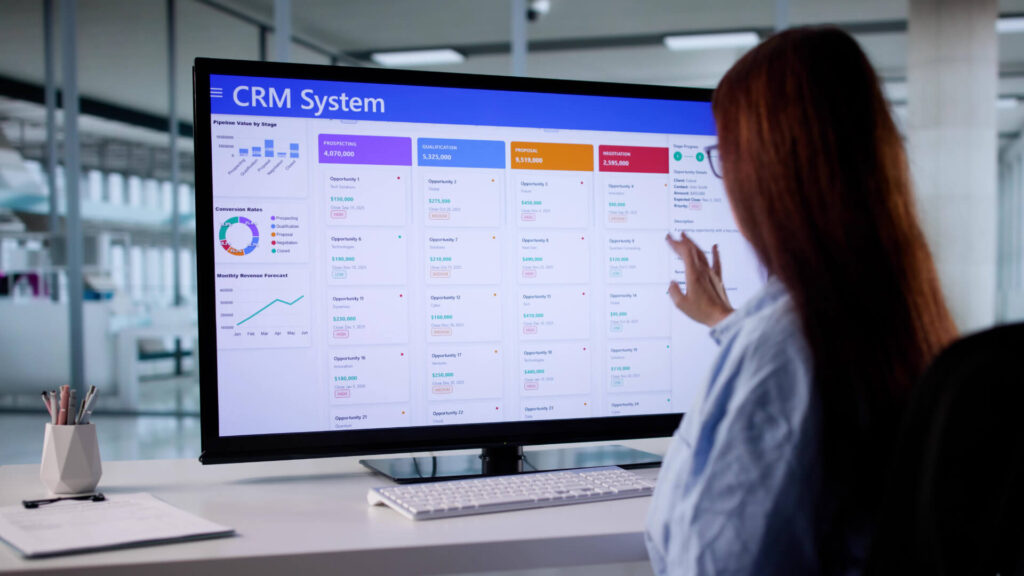
A CRM acts as the central hub for customer data and communication.
CRM Benefits
- Centralized customer information
- Automated task assignments
- Sales pipeline visibility
- Improved collaboration
- Better forecasting
Popular CRM Platforms
- HubSpot CRM
- Salesforce
- Zoho CRM
- Microsoft Dynamics 365
Develop Evergreen Content Assets
Evergreen content continues generating traffic and leads for years.
Types of Evergreen Content
Educational Blog Posts
Answer common customer questions.
How-To Guides
Provide step-by-step solutions.
Resource Libraries
Offer downloadable assets that remain relevant.
Example
A marketing agency publishes a guide on SEO fundamentals that generates leads consistently for several years.
Build Automated Customer Journeys
Customer journeys guide prospects from awareness to purchase.
Stages of the Customer Journey
Awareness
Introduce prospects to your brand.
Consideration
Provide educational content and solutions.
Decision
Offer proof, testimonials, and product information.
Automation Opportunities
- Personalized email sequences
- Dynamic website content
- Retargeting advertisements
Create Data-Driven Decision Systems
Scalable marketing depends on data.
Key Metrics to Track
Website Performance
- Traffic sources
- Bounce rate
- Time on page
Lead Metrics
- Conversion rate
- Cost per lead
- Lead quality score
Revenue Metrics
- Customer acquisition cost (CAC)
- Customer lifetime value (CLV)
- Return on ad spend (ROAS)
Example
A SaaS company identifies that webinars generate leads at half the cost of paid search and reallocates budget accordingly.
Use Artificial Intelligence to Increase Scalability
AI is transforming marketing operations.
AI Applications
Content Optimization
AI tools assist with keyword research and content recommendations.
Predictive Analytics
Identify high-intent prospects before competitors.
Customer Support Automation
Chatbots handle common questions 24/7.
Example
An online retailer uses AI-driven product recommendations to increase average order value.

Real-World Example: Scaling a Marketing System
Company Background
A B2B software company struggled to manage increasing lead volume.
Challenges
- Slow response times
- Inconsistent follow-up
- Manual reporting
Solution
The company implemented:
- CRM integration
- Automated email workflows
- Lead scoring
- Dashboard reporting
Results
Within 12 months:
- Lead response time decreased by 80%
- Conversion rates increased by 35%
- Marketing costs decreased by 20%
Common Mistakes to Avoid
- Over-Automation: Too much automation can make communication feel robotic.
- Poor Data Management: Inaccurate data reduces campaign effectiveness.
- Lack of Testing: Systems must be continuously optimized.
- Ignoring Customer Feedback: Automation should enhance, not replace, customer understanding.
The Future of Scalable Marketing Systems
Emerging technologies are making marketing systems even more powerful.
Trends to Watch
- AI-powered personalization
- Predictive customer behavior modeling
- Voice search optimization
- First-party data strategies
- Advanced automation workflows
Businesses that embrace these technologies will gain a competitive advantage in the coming years.
Frequently Asked Questions About Scalable Marketing Systems
What is a scalable marketing system?
A scalable marketing system is a structured combination of processes, tools, automation, and workflows that helps a business manage more leads, campaigns, and customers without increasing costs or manual workload at the same rate.
How long does it take to build a scalable marketing system?
The timeline depends on the size of the business, existing tools, and the complexity of the marketing process. A simple system may take a few weeks to set up, while a more advanced setup involving CRM integration, automation, analytics, and multiple channels can take several months to refine.
Can small businesses benefit from marketing automation?
Yes. Marketing automation can be especially valuable for small businesses because it reduces repetitive work and helps small teams manage lead follow-ups, email campaigns, customer communication, and reporting more efficiently.
Why are scalable marketing systems important for business growth?
Scalable marketing systems help businesses improve efficiency, maintain consistent customer communication, reduce operational bottlenecks, and manage growth more effectively. They also make it easier to handle increasing lead volume without sacrificing service quality or marketing performance.
What tools are needed to build scalable marketing systems?
Most scalable marketing systems use a combination of CRM software, email marketing platforms, marketing automation tools, analytics dashboards, content management systems, and lead tracking software. The right technology stack depends on the business model, team size, and customer journey.
What should a business automate first?
Start with repetitive tasks that consume time but follow a predictable process. Common examples include lead capture, welcome emails, follow-up sequences, contact segmentation, appointment reminders, campaign reporting, and basic customer notifications. Automating these areas often delivers the fastest operational improvements.
Conclusion
Building scalable marketing systems that run without constant supervision is one of the smartest investments a business can make. By documenting processes, automating repetitive tasks, leveraging CRM technology, creating evergreen content, and making data-driven decisions, organizations can achieve sustainable growth while reducing operational complexity.
The businesses that thrive in the future will not necessarily be the ones with the largest teams but the ones with the most efficient systems. Start building scalable marketing systems today, and you’ll create a foundation for long-term success, profitability, and growth.
