

AI Search Strategy
Generative AI SEO Guidance is now essential for businesses that want to stay visible as Google Search becomes more AI-driven. Search is no longer only about ranking traditional blue links. Today, your content must be clear enough for people, structured enough for search engines, and trustworthy enough for AI-powered results such as Google AI Overviews and answer-based search experiences.
For business owners, marketers, agencies, consultants, startups, and growth-focused companies, this shift creates both a challenge and an opportunity. Generic content is becoming easier to ignore, while helpful, expert-led, well-structured content has more chances to appear across traditional search results, AI summaries, featured snippets, and high-intent discovery journeys.
This complete guide explains how to optimize for Google AI Search using practical SEO, content strategy, technical structure, topical authority, and conversion-focused thinking. You will learn what matters, what to avoid, and how to turn AI SEO into a real growth system for your website.
Generative AI SEO Guidance: The Short Answer
Generative AI SEO Guidance means optimizing your website so Google, AI search systems, and human users can easily understand, trust, summarize, and act on your content. It combines traditional SEO, answer engine optimization, generative engine optimization, structured data, topical authority, E-E-A-T signals, technical SEO, and conversion strategy.
The goal is not only to rank. The goal is to become a useful source that search engines and AI systems can confidently interpret, while also giving users a strong reason to click, read, trust, and contact your business.
What Generative AI SEO Guidance Means for Google AI Search
Google AI Search changes how people discover information. Instead of only scanning ten organic results, users may now see AI-generated summaries, source links, follow-up answers, and direct recommendations. This means websites must be built for clarity, authority, structure, and usefulness.
Generative AI SEO Guidance helps your content become easier to extract, summarize, and reference. A strong page should answer the user’s question directly, explain the topic in depth, support claims with credible context, and guide readers toward the next useful action.
This does not replace traditional SEO. Your website still needs crawlable pages, indexable content, fast loading speed, relevant keywords, clean headings, strong internal links, and a reliable user experience. AI SEO simply raises the standard for how complete and useful your content must be.
Generative AI SEO Guidance vs Traditional SEO
Traditional SEO focuses on rankings, keywords, backlinks, technical health, and search visibility. Generative AI SEO adds another layer: making your content easier for AI search systems to understand as a complete answer.
For example, an article that only repeats keywords may rank poorly because it lacks substance. But an article with definitions, examples, comparison tables, FAQs, expert notes, and clear next steps has more value for both humans and AI-powered discovery.
| SEO Area | Traditional SEO Focus | AI Search Optimization Focus |
|---|---|---|
| Keywords | Match search queries and ranking terms | Understand topics, entities, user intent, and related questions |
| Content | Publish optimized pages and articles | Create complete, answer-first, expert-led resources |
| Technical SEO | Improve crawling, indexing, speed, and mobile usability | Ensure content is cleanly rendered, accessible, structured, and machine-readable |
| Authority | Earn backlinks and domain trust | Build expertise, brand mentions, author credibility, citations, and topical depth |
| Conversion | Drive clicks and leads | Turn AI-assisted discovery into qualified actions and consultation requests |
Why Generative AI SEO Guidance Matters Now
The way people search is becoming more conversational. Users ask longer questions, compare options faster, and expect clear answers immediately. Google AI Search can summarize information from multiple sources, which means your content must be more useful than a basic keyword article.
Generative AI SEO Guidance matters because businesses can no longer rely only on publishing more blog posts. They need a stronger system: better content structure, stronger trust signals, clearer service relevance, improved technical SEO, and meaningful internal linking.
When your content is weak, AI search may ignore it. When your content is clear, helpful, and authoritative, it has a better chance of supporting visibility, branded search growth, user trust, and qualified leads.
AI Search Visibility Is Becoming a Competitive Advantage
AI search visibility means your brand has a stronger chance of being discovered when people ask questions related to your expertise. This may happen through AI Overviews, traditional rankings, featured snippets, knowledge-style results, or branded searches influenced by earlier discovery.
Businesses that invest early in AI SEO can build topical authority before their competitors fully understand the shift.
Clicks Still Matter, But Better Clicks Matter More
Some informational searches may produce fewer clicks because users get quick answers directly in search results. However, users with stronger intent still click when they need details, comparison, tools, services, or expert help.
Your job is to create content that earns the right clicks. A smaller number of qualified visitors can be more valuable than a large number of low-intent visitors who never convert.
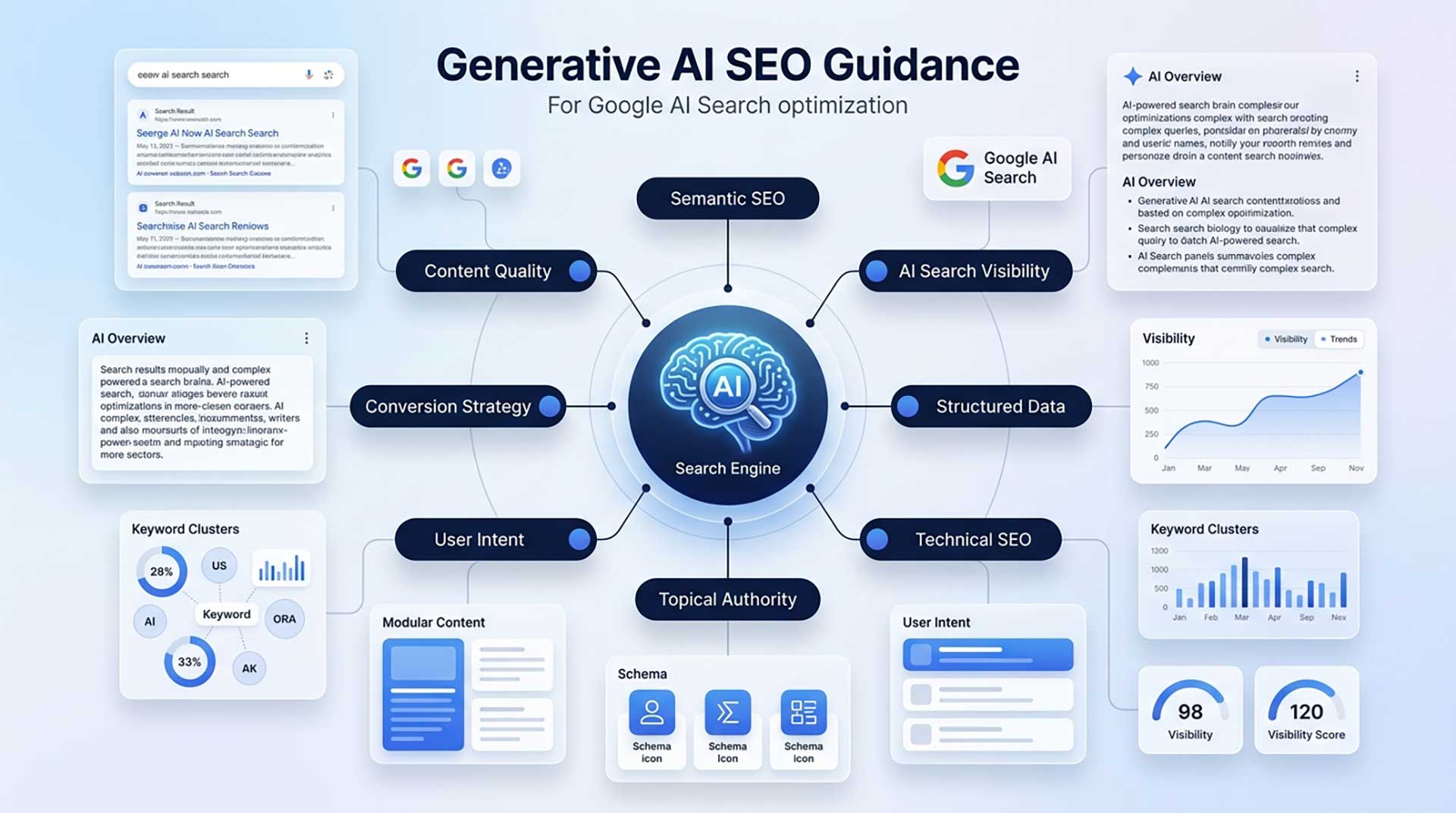
The Generative AI SEO Guidance Framework
A strong AI SEO strategy is not built from one tactic. It requires a complete framework that improves how your website is understood by search engines, AI systems, and potential customers.
1. Build Topical Authority Before Chasing Rankings
Topical authority means your website has enough high-quality content around a subject to be seen as a reliable resource. Instead of publishing random articles, build connected content clusters around your core services and audience needs.
For Digital Mind Metrics, strong clusters could include AI SEO, technical SEO, Google Search Console, content strategy, analytics, lead generation, website performance, and conversion optimization.
2. Use Generative AI SEO Guidance in Answer-First Content
Answer-first content gives users a clear answer before expanding into deeper explanation. This structure works well for Google Search, AI Overviews, featured snippets, and human readers who want quick clarity.
Start major sections with a direct answer, then support it with examples, steps, data, comparisons, or expert insight.
3. Add Semantic Context and Related Entities
AI search systems understand topics through relationships. Use related entities naturally, such as Google AI Search, AI Overviews, E-E-A-T, structured data, Search Console, technical SEO, crawlability, indexing, answer engine optimization, and content quality.
This helps Google understand the full context of the page without forcing the same phrase repeatedly.
4. Strengthen Technical SEO and Crawlability
Content cannot perform well if Google cannot crawl, index, or render it correctly. Make sure your article body is visible in the live page output, not only inside a visual builder preview.
Use clean HTML, proper heading structure, compressed images, fast hosting, valid schema, mobile-friendly layouts, and internal links that help users move through related resources.
5. Improve Trust Signals and Brand Credibility
AI search visibility is stronger when your website demonstrates trust. Add author information, real expertise, editorial standards, service clarity, case studies, testimonials, contact details, and original insights.
Trust is not created by keywords alone. It is created by useful content, transparent business information, and a consistent brand experience.
Need Help Building an AI SEO Strategy?
If your website is getting impressions but not enough clicks, the issue may be weak content structure, poor title optimization, technical SEO gaps, or unclear AI search visibility. Digital Mind Metrics can help identify what is holding your site back.
Request an AI SEO ReviewStep-by-Step Generative AI SEO Guidance for Your Website
The best way to approach AI SEO is through a structured process. Use the following steps to improve visibility, clarity, and conversion performance.
Step 1: Audit Your Existing Search Performance
Start with Google Search Console. Look for pages with impressions but low clicks, pages ranking between positions 8 and 30, and articles that receive traffic but generate no leads.
These pages often have hidden potential. They may need better titles, stronger introductions, updated content, clearer internal links, improved schema, or a better CTA.
Step 2: Review Search Intent and User Questions
Search intent is the reason behind a query. A user searching for “Generative AI SEO Guidance” may want a definition, checklist, strategy, examples, tools, or expert help. Your article should serve these needs in a logical order.
Build sections around real questions your audience asks before hiring an SEO consultant, requesting an audit, or investing in content strategy.
Step 3: Create a Clear Content Architecture
Use H2 headings for major sections and H3 headings for supporting ideas. Keep the structure clean and easy to scan. Each section should answer one clear part of the topic.
A strong AI SEO article usually includes a short answer, deep explanation, framework, checklist, examples, mistakes, tools, FAQs, and conversion CTA.
Step 4: Add Internal Links With Purpose
Internal links help Google understand your website structure and help users discover related services. For example, this article can naturally connect to Digital Mind Metrics resources for digital marketing strategy, SEO audit services, AI SEO and search visibility, and digital growth consultation.
Do not overlink. Each link should help the reader continue their journey.
Step 5: Add Helpful External References
External links should support credibility when they add real value. Google’s own resources on helpful content and structured data are useful references for understanding how search systems interpret content.
You can also use trusted industry resources such as Moz SEO learning resources or Ahrefs SEO guides when they support a specific point.
Step 6: Add Conversion Paths Without Being Pushy
SEO traffic should support business growth. Add soft CTAs inside the article and a stronger CTA near the end. The CTA should match the user’s problem, such as needing an SEO audit, website performance review, or AI search visibility strategy.
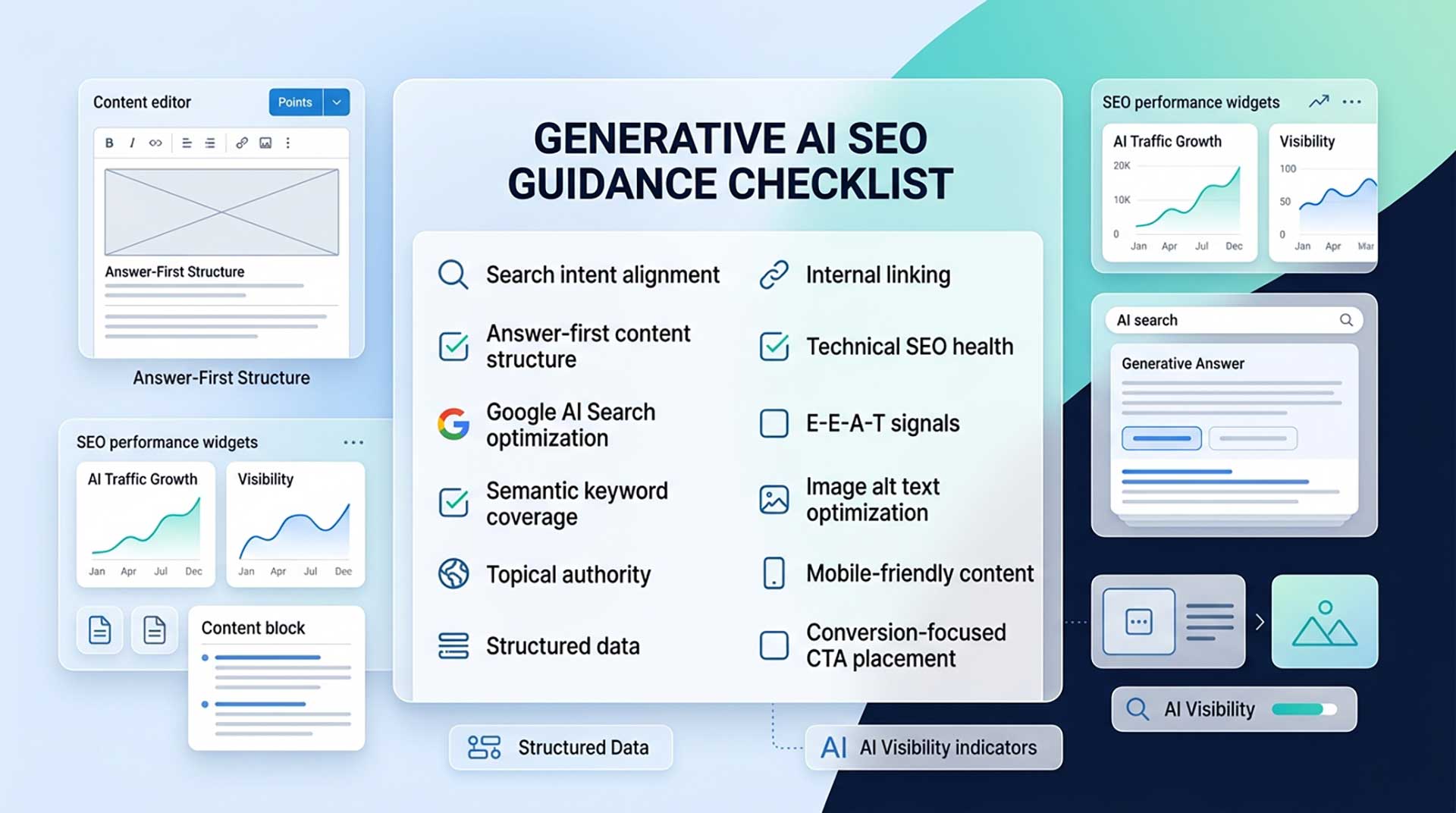
Generative AI SEO Guidance Checklist for Content Teams
Use this checklist before publishing or updating an article for Google AI Search optimization.
- The focus keyword appears naturally in the first paragraph.
- The article gives a direct answer near the beginning.
- The main topic appears in relevant H2 and H3 subheadings.
- The content covers search intent from awareness to decision stage.
- The article includes examples, steps, tables, and practical guidance.
- Internal links connect users to relevant service or strategy pages.
- External links support credibility without overwhelming the article.
- Images include descriptive alt text and lazy loading.
- The article body is visible on the live page, not only inside Elementor preview.
- Schema matches the visible content on the page.
- The page has a clear CTA for users who need expert help.
Practical Use Cases for Generative AI SEO Guidance
Different businesses can apply AI SEO in different ways. The core principles remain the same: answer clearly, structure content well, build trust, and connect the content to business outcomes.
Use Case 1: Business Owners
A business owner may not care about technical SEO language, but they care about leads, calls, visibility, and growth. For this audience, content should explain problems clearly and show practical next steps.
For example, an article about low website traffic should explain why clicks are low, how to diagnose the issue in Search Console, and when to request a professional audit.
Use Case 2: Agencies and Consultants
Agencies can use Generative AI SEO Guidance to improve client strategies. Instead of only delivering keyword lists, agencies can build topic clusters, AI visibility reports, content refresh plans, and conversion-focused SEO roadmaps.
This creates more strategic value and helps clients understand why SEO now requires content quality, technical structure, and brand authority.
Use Case 3: SaaS and Technology Companies
SaaS companies need content that explains use cases, product comparisons, workflows, integrations, and decision criteria. AI search may summarize these topics, so pages should be structured with clear definitions, comparison tables, FAQs, and practical examples.
Use Case 4: Ecommerce Brands
Ecommerce websites can use AI SEO to improve category pages, product guides, buying guides, reviews, FAQs, and comparison content. Clear product information, schema, and helpful buying advice can support both search visibility and conversions.
Generative AI SEO Guidance Mistakes to Avoid
Many websites struggle because they treat AI SEO as a shortcut instead of a strategy. Avoid the following mistakes if you want stronger long-term visibility.
Mistake 1: Publishing Generic AI Content
AI tools can support research, outlines, editing, and brainstorming. But generic AI-written content without human insight, examples, experience, or brand perspective usually feels weak.
Use AI as a support tool, not a replacement for expertise.
Mistake 2: Ignoring the First Paragraph
The introduction matters for readers and SEO tools. If the topic is not clear immediately, users may leave and SEO tools may flag the page. Place the primary topic naturally in the opening paragraph and explain the value quickly.
Mistake 3: Weak Subheading Optimization
Subheadings help readers scan the page and help search engines understand structure. Include the core topic in some H2 and H3 headings, but do not force it into every heading.
Mistake 4: Forgetting Technical SEO
If the page is slow, blocked, poorly rendered, or missing the actual article body, rankings and clicks can suffer. Always check the live page, not only the editor preview.
Mistake 5: No Clear Business Goal
Content should not exist only to fill a blog. It should support visibility, trust, leads, consultations, audits, and business growth. Every major article should have a clear purpose.
Tools That Support Generative AI SEO Guidance
No single tool can solve AI SEO. You need a workflow that combines search data, technical checks, content analysis, and conversion review.
Google Search Console
Use Search Console to find impressions, clicks, CTR, average position, indexed pages, and query performance. Pages with high impressions and low clicks are often the best places to start.
Google Analytics
Analytics helps you understand what users do after they land on the page. Track engagement, conversions, traffic sources, scroll behavior, and lead quality.
SEO Crawling Tools
Crawling tools can identify broken links, missing headings, duplicate titles, thin pages, redirect issues, and technical problems that reduce performance.
Content Optimization Tools
Use content tools to review search intent, topic coverage, readability, entity usage, and competitor gaps. The goal is not to copy competitors, but to build a more useful resource.
AI Visibility Tracking
AI visibility tools are emerging to track brand mentions, AI-generated citations, and answer engine presence. These tools can support strategy, but they should be used alongside traditional SEO data.
Want to Find Out Why Your Website Is Not Getting Clicks?
If your website is receiving impressions but not generating enough clicks or leads, the issue may be title quality, content structure, search intent mismatch, weak internal linking, or poor conversion flow.
Get a Website Performance ReviewHow to Measure Generative AI SEO Guidance Performance
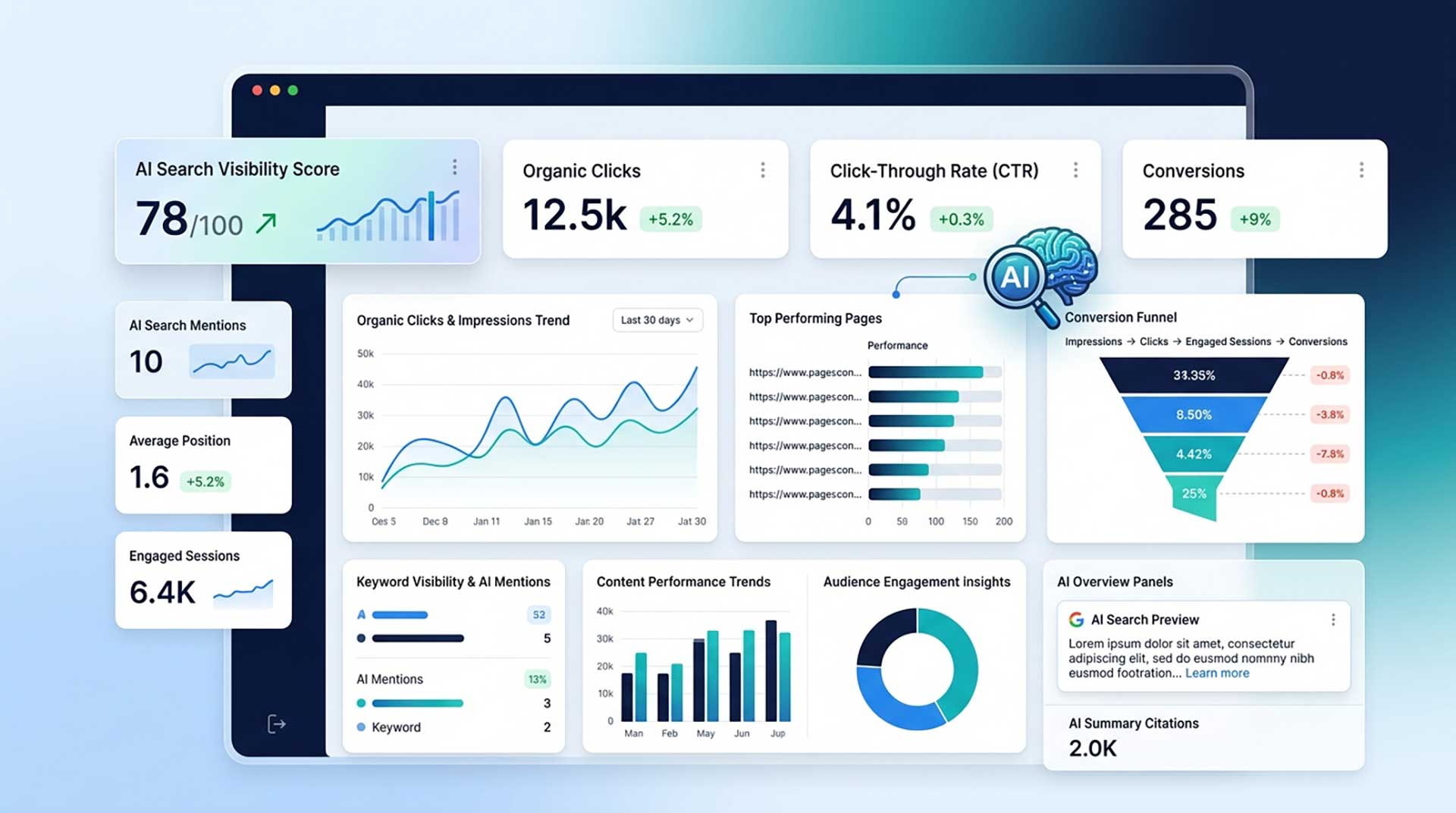
Measuring AI SEO performance requires more than checking keyword rankings. Rankings are still useful, but they do not show the full picture of AI-driven discovery.
Track Search Visibility Metrics
Review clicks, impressions, CTR, average position, indexed pages, and query growth. These metrics show how your content performs in traditional Google Search.
Track Engagement Metrics
Look at time on page, scroll depth, returning visitors, engaged sessions, and conversion actions. If users click but do not engage, the content may not satisfy intent.
Track Conversion Metrics
SEO should support business outcomes. Track consultation requests, audit form submissions, email inquiries, phone calls, and lead quality.
Track Brand Growth
Branded search growth can show that users are discovering and remembering your business. AI search may influence this behavior even when the first interaction does not create an immediate click.
Advanced Generative AI SEO Guidance for Better Conversions
Visibility alone is not enough. A page should also help users decide whether your business can solve their problem.
Match CTAs to Search Intent
A beginner reading an educational guide may not be ready to buy immediately. A soft CTA such as “request an audit” or “review your visibility gaps” feels more natural than a hard sales pitch.
Use Summary Cards and Decision Blocks
Summary cards help users remember key points. Decision blocks help them understand when they should take action. These elements improve readability and lead quality.
Connect Articles to Service Pages
When someone reads about AI SEO, they may also need help with content strategy, technical SEO, analytics, or lead generation. Link naturally to related services and consultation pages.
Improve Trust Near the CTA
Before asking users to contact you, remind them what they will receive. For example, mention a practical audit, visibility review, content roadmap, or digital growth strategy.
FAQ About Generative AI SEO Guidance
What is Generative AI SEO Guidance?
Generative AI SEO Guidance is the process of optimizing website content, structure, authority, and technical SEO so your pages can perform better in traditional search, Google AI Search, AI Overviews, and answer-based discovery experiences.
How is AI SEO different from normal SEO?
Normal SEO focuses on rankings, crawlability, keywords, backlinks, and technical health. AI SEO also focuses on answer clarity, structured information, topical authority, entities, trust signals, and content that AI systems can understand and summarize.
Does Generative AI SEO Guidance help increase clicks?
Yes, it can help improve qualified clicks when combined with strong title tags, useful meta descriptions, relevant search intent, clear content structure, and better conversion paths. However, clicks also depend on rankings, snippets, competition, and user behavior.
Should I rewrite old articles for AI SEO?
Yes, especially articles with impressions but low clicks. Improve the introduction, answer blocks, headings, internal links, examples, FAQs, image alt text, and CTA sections. Also make sure the article content is visible on the live page.
How often should AI SEO content be updated?
Review important AI SEO and search visibility content every three to six months. Update sooner if Google changes search features, competitors improve their content, or Search Console shows declining CTR or rankings.
Can AI tools write SEO content for my website?
AI tools can help with research, outlines, editing, and content improvement. However, final content should include expert review, original examples, accurate information, brand perspective, and practical value.
What is the best first step for Google AI Search optimization?
The best first step is an SEO and content audit. Identify pages with weak visibility, low CTR, poor structure, thin content, technical issues, and missing conversion paths before publishing more content.
Can Digital Mind Metrics help with Generative AI SEO Guidance?
Yes. Digital Mind Metrics helps businesses review AI search visibility, improve SEO content structure, strengthen technical SEO, and build practical digital growth strategies designed to generate qualified leads.
Turn Generative AI SEO Guidance Into Growth
If your website is not getting clicks, leads, or qualified visibility, you do not need random content. You need a clear diagnosis and a focused strategy.
Digital Mind Metrics can help you review your website, identify SEO gaps, improve AI search visibility, and build a practical roadmap for better organic growth.
Book Your Free Digital Growth ConsultationConclusion: Generative AI SEO Guidance Gives Search a Clear Direction
Generative AI SEO Guidance is no longer optional for businesses that want to compete in modern search. Google AI Search, AI Overviews, and answer engines are changing how users discover information, compare brands, and decide who to trust.
The websites that perform best will not be the ones publishing the most generic content. They will be the ones publishing the clearest, most useful, most structured, and most trustworthy content.
Start with your current search data. Fix technical issues. Improve article structure. Build topical authority. Add meaningful internal links. Create answer-first content. Then connect your SEO efforts to real business goals such as audits, consultations, leads, and revenue.
With the right strategy, Generative AI SEO Guidance can help your website become easier to find, easier to understand, and easier to trust in the future of Google Search.
