
The Ultimate Content Marketing Strategy Template (Free Structure)
Creating content without a plan often leads to inconsistency, wasted effort, and poor results. This is why every successful brand relies on a clear content marketing strategy template. Instead of guessing what to post next, a template gives you a structured system to plan, publish, distribute, and measure content effectively.
In this guide, you’ll learn how to build and use a content marketing strategy template step by step, using a free structure that works for blogs, businesses, agencies, and personal brands.
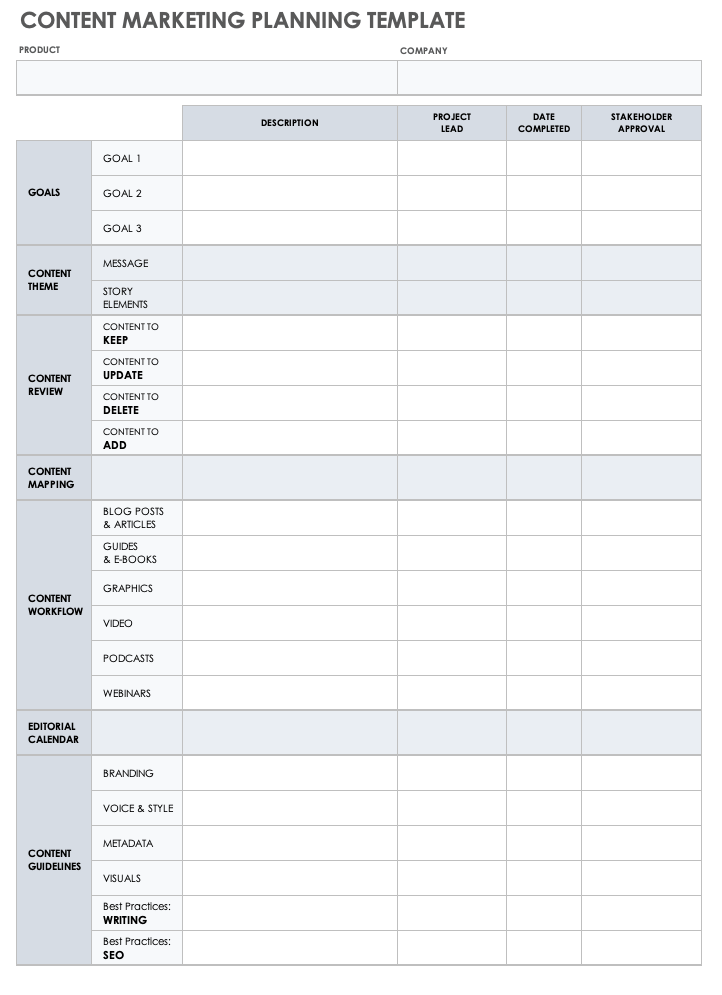
What Is a Content Marketing Strategy Template?
A content marketing strategy template is a structured framework that helps you organize all your content efforts in one place. It defines:
Who you create content for
What type of content you publish
Why you publish it
Where it is distributed
How success is measured
Instead of random posting, you follow a repeatable system aligned with business goals.
Why a Content Marketing Strategy Template Is Important
Many brands publish content regularly but still fail to see results. The reason is not lack of effort — it’s lack of structure.
A clear content marketing strategy template helps you:
Stay consistent
Align content with business goals
Improve SEO performance
Save time and resources
Measure what actually works
With a template, every piece of content has a purpose.
Step 1: Define Your Target Audience
The first step in any content marketing strategy template is audience clarity.
Ask yourself:
Who is your ideal reader or customer?
What problems are they trying to solve?
What questions do they search for online?
What motivates them to take action?
Create a simple audience profile that includes:
Demographics
Pain points
Goals
Preferred platforms
The clearer your audience, the better your content will perform.
Step 2: Set Clear Content Goals
Content without goals is just activity, not strategy.
Your content marketing strategy template should define clear objectives such as:
Increasing organic traffic
Generating leads
Building authority
Improving engagement
Supporting sales
Each piece of content should support at least one goal. This makes performance tracking easier and more meaningful.
Step 3: Define Your Content Pillars
Content pillars are the main topics your brand focuses on.
A strong content marketing strategy template usually includes 3–5 pillars.
Examples:
Content marketing
SEO strategies
Brand storytelling
Social media growth
Digital analytics
Each pillar supports multiple blog posts and subtopics. This structure improves topical authority and SEO rankings.
Step 4: Keyword Research and Search Intent
SEO is a core part of any content marketing strategy template.
Keyword research helps you understand:
What people are searching for
How competitive keywords are
What type of content users expect
Steps to follow:
Identify primary keywords
Find long-tail variations
Analyze competitor content
Match content with search intent
Always prioritize user intent over keyword stuffing.
Step 5: Choose the Right Content Formats
Different goals require different formats.
Your content marketing strategy template should include a mix of:
Blog posts (SEO and education)
Case studies (trust building)
Guides and frameworks (authority)
Emails (nurturing)
Social content (engagement)
Videos (visibility)
A balanced mix keeps your content ecosystem healthy and effective.
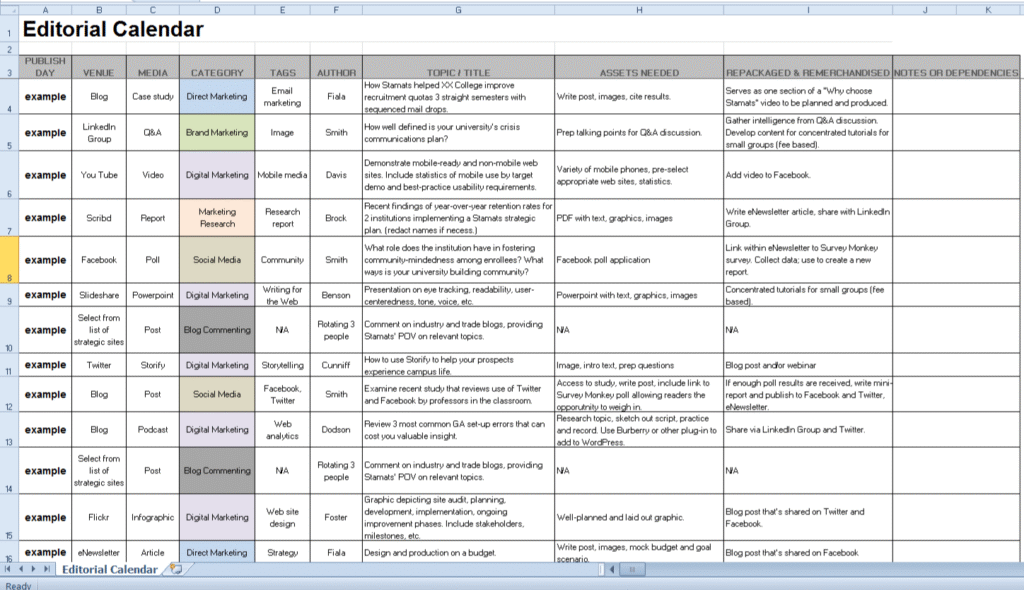
Step 6: Build a Content Calendar
Planning prevents inconsistency.
A simple content marketing strategy template uses a 90-day content plan.
Month 1: Awareness
Educational blogs
Beginner guides
Industry insights
Month 2: Trust
Case studies
Brand stories
Behind-the-scenes content
Month 3: Conversion
Comparison articles
Product-focused content
Lead magnets
This approach balances SEO, engagement, and conversion.
Step 7: Create a Distribution Plan
Publishing is only half the work.
Your content marketing strategy template should define where and how content is shared:
Search engines (SEO)
Email newsletters
Social media platforms
Community groups
One blog post can be repurposed into:
Multiple social posts
Email content
Short videos
Visual quotes
Distribution multiplies reach without extra creation effort.
Step 8: Internal Linking Strategy
Internal linking is often overlooked but extremely powerful.
A good content marketing strategy template includes rules like:
Link related blog posts together
Connect cluster articles to pillar pages
Guide readers to next steps
Internal linking improves:
SEO authority
Time on site
User experience
Step 9: Define Conversion Paths
Traffic alone does not grow a business.
Your content marketing strategy template should define clear actions such as:
Newsletter sign-ups
Free downloads
Consultation bookings
Product demos
Each piece of content should guide readers toward one primary action.
Step 10: Track KPIs That Matter
Measure performance regularly.
Important KPIs include:
Organic traffic growth
Keyword rankings
Engagement time
Email subscribers
Leads and conversions
Avoid focusing only on vanity metrics like impressions. Measure what supports business growth.
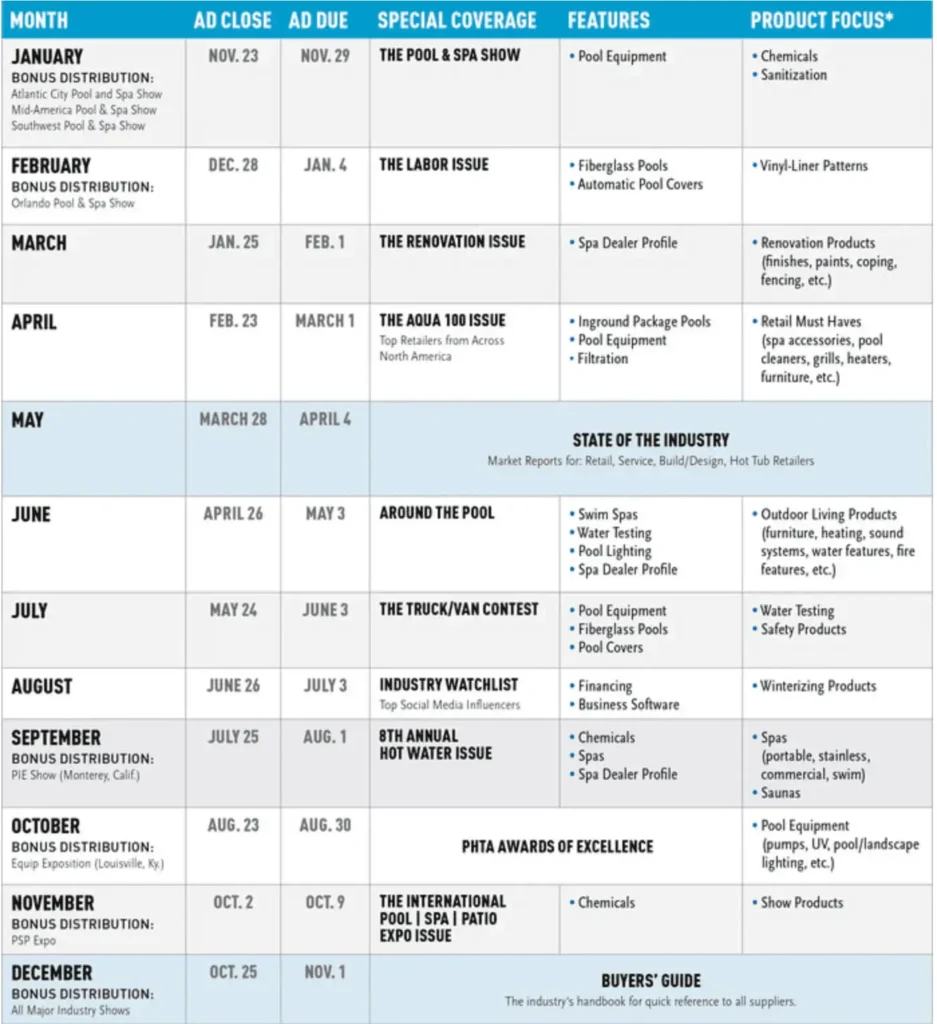
Bonus: One-Page Content Marketing Strategy Template
You can copy and use this free structure:
Target Audience:
Who are we creating content for?
Main Goal:
Traffic / Leads / Authority / Sales
Content Pillars:
1.
2.
3.
Primary Keywords:
Content Formats:
Publishing Frequency:
Distribution Channels:
Conversion CTA:
KPIs:
This simple layout keeps your strategy focused and actionable.
Common Mistakes to Avoid
Even with a content marketing strategy template, brands often fail by:
Publishing without SEO research
Ignoring content distribution
Changing strategy too often
Creating unrelated topics
Skipping performance reviews
Consistency and clarity are more important than volume.
How a Content Marketing Strategy Template Improves SEO
A structured content marketing strategy template improves SEO by:
Building topical clusters
Strengthening internal links
Matching user intent
Increasing dwell time
Supporting consistent publishing
Search engines reward structure, relevance, and depth.
Evergreen Content and Long-Term Growth
Evergreen content is a key part of a smart content marketing strategy template.
Examples include:
Ultimate guides
Framework articles
Step-by-step tutorials
Industry fundamentals
Update evergreen content regularly to maintain rankings and traffic.
Final Thoughts
A content marketing strategy template is not about creating more content — it’s about creating the right content with purpose.
When you:
Understand your audience
Set clear goals
Build content pillars
Plan distribution
Track performance
You turn content into a long-term growth system.
With a clear content marketing strategy template, your content becomes consistent, scalable, and results-driven.