
A Content Cluster Strategy allows websites to build authority around a topic by connecting related articles through strategic internal linking. This approach helps search engines understand the depth of your content and improves visibility for multiple keywords.
In this guide, you will learn what content clusters are, how they work, and how to implement them to dominate search results in 2026 and beyond.
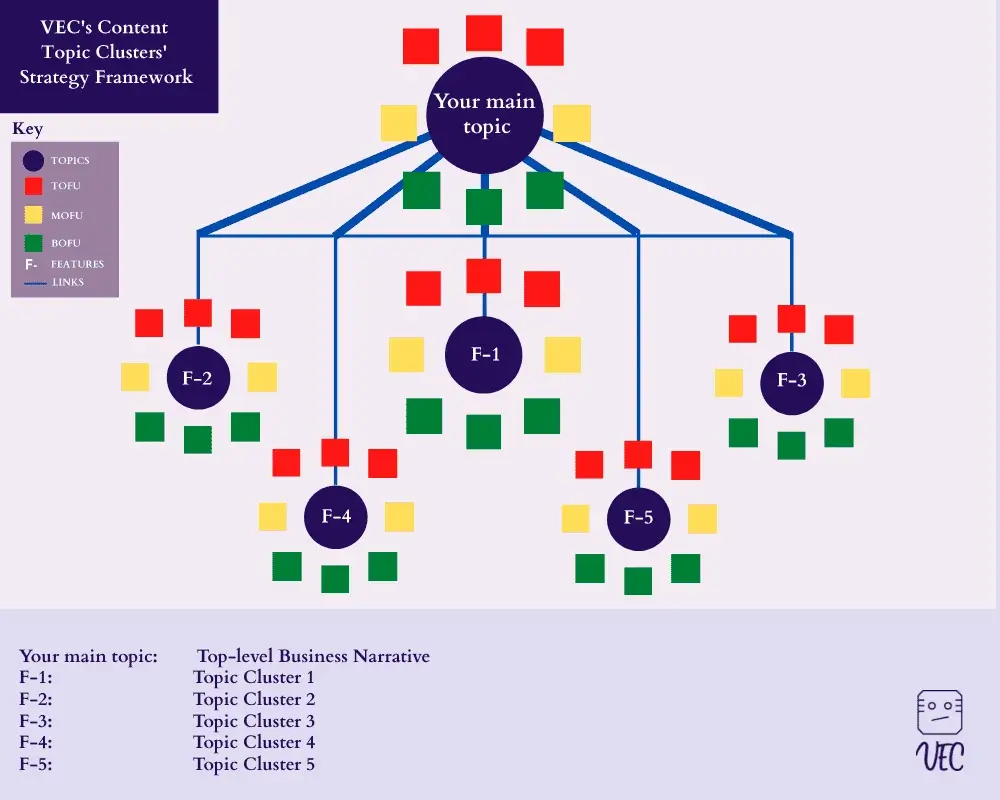
What is a Content Cluster Strategy?
A Content Cluster Strategy is an SEO content framework where multiple related articles are grouped around a central topic and connected using internal links.
Instead of writing isolated blog posts, this model creates a structured content ecosystem that helps search engines understand how different pieces of content relate to each other.
Simple Definition
A content cluster strategy is a group of interlinked articles built around a central pillar page to improve topical authority and search engine rankings.
Why Content Clusters Strategy Matter for SEO in 2026
Search algorithms have become more advanced and now focus on entities, context, and topic relationships.
When your content is structured into clusters, search engines can easily determine:
The main topics your website covers
How deeply you cover those topics
Whether your website demonstrates authority
Websites that implement content clusters tend to rank for hundreds of related keywords, not just a single search term.
This makes content clusters one of the most effective strategies for modern SEO.
Core Components of a Content Cluster Strategy
A content cluster typically consists of three main elements.
Pillar Page (Core Topic Page)
A pillar page is a comprehensive article that covers a broad topic in detail.
For example:
Complete Guide to SEO Strategy in 2026
This page acts as the central hub of the content cluster and links to multiple related articles.
Characteristics of a strong pillar page:
Long-form content (3000–5000 words)
Covers the entire topic broadly
Includes links to detailed cluster articles
Targets high-volume keywords
Content Cluster Strategy (Supporting Articles)
Cluster content focuses on specific subtopics related to the pillar page.
Example cluster articles for an SEO pillar page:
Keyword research guide
Technical SEO checklist
On-page SEO optimization
Link building strategies
SEO content writing tips
Each cluster article links back to the pillar page, strengthening the overall topic relevance.
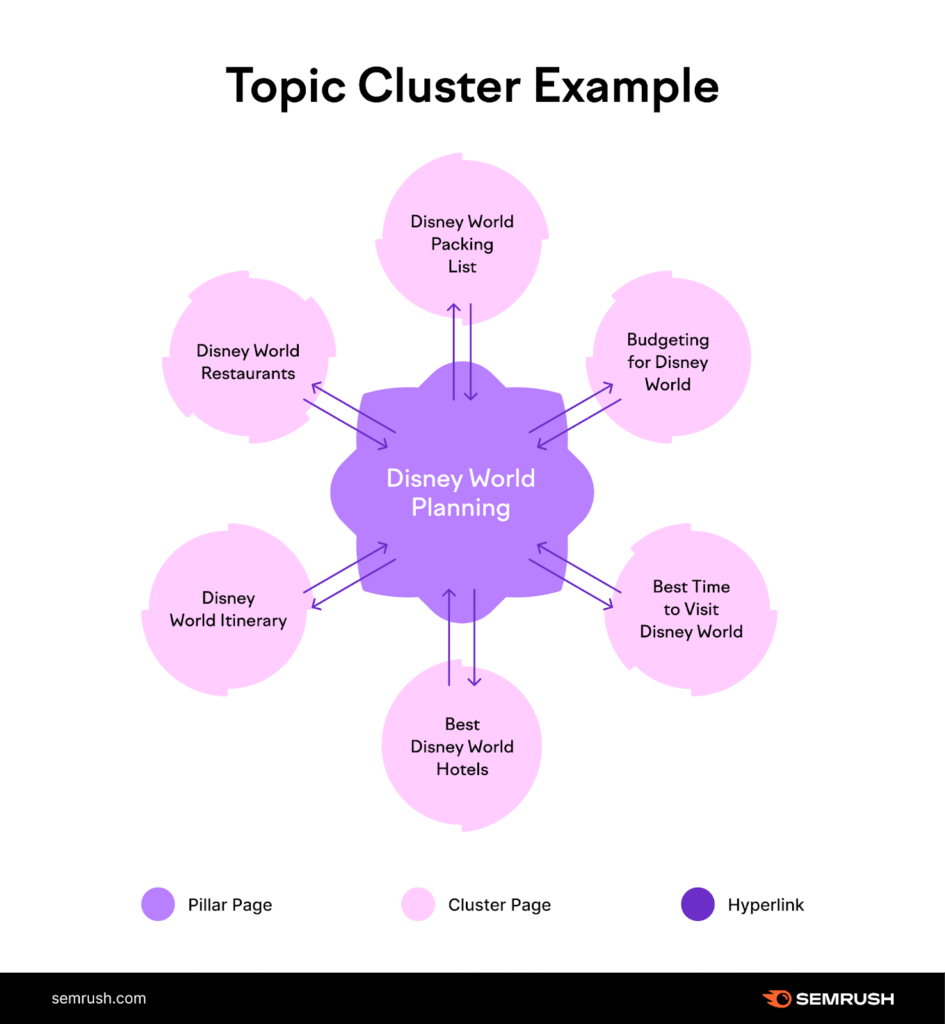
Step-by-Step Content Cluster Strategy Framework
Step 1: Choose a Broad Topic
The first step is selecting a core topic that is relevant to your niche and has strong search demand.
Examples of pillar topics:
Digital marketing
Content marketing
AI tools for marketing
Email marketing automation
Your topic should be broad enough to support multiple related articles.
Step 2: Conduct Topic and Keyword Research
Next, identify all related subtopics connected to your main theme.
You can find these ideas using:
Keyword research tools
Search engine suggestions
Competitor analysis
Related searches
Your goal is to identify 20–50 related keyword opportunities.
Step 3: Create the Pillar Page
Develop a comprehensive pillar page covering the entire topic.
Example structure:
Introduction
Overview of the topic
Key strategies
Best practices
Tools and resources
Case studies
FAQs
Within the pillar page, link to detailed cluster articles for deeper explanations.
Step 4: Publish Cluster Articles
Each cluster article should target a specific long-tail keyword.
For example, if the pillar topic is SEO Strategy, cluster articles might include:
How to perform keyword research
Technical SEO checklist for beginners
On-page SEO optimization guide
Link building strategies for websites
Cluster articles typically range from 1200–2000 words.
Step 5: Build Strong Internal Links
Internal linking is the backbone of a content cluster.
Best practices include:
• Linking from the pillar page to every cluster article
• Linking from cluster articles back to the pillar page
• Linking related cluster posts to each other
• Using descriptive anchor text
This structure strengthens the topical relationship between pages.
Step 6: Expand the Cluster Over Time
SEO is a long-term strategy. As new topics and trends emerge, continue adding new cluster articles.
Over time, your pillar page becomes a content hub supported by dozens of related articles.
This increases topical authority and improves rankings.
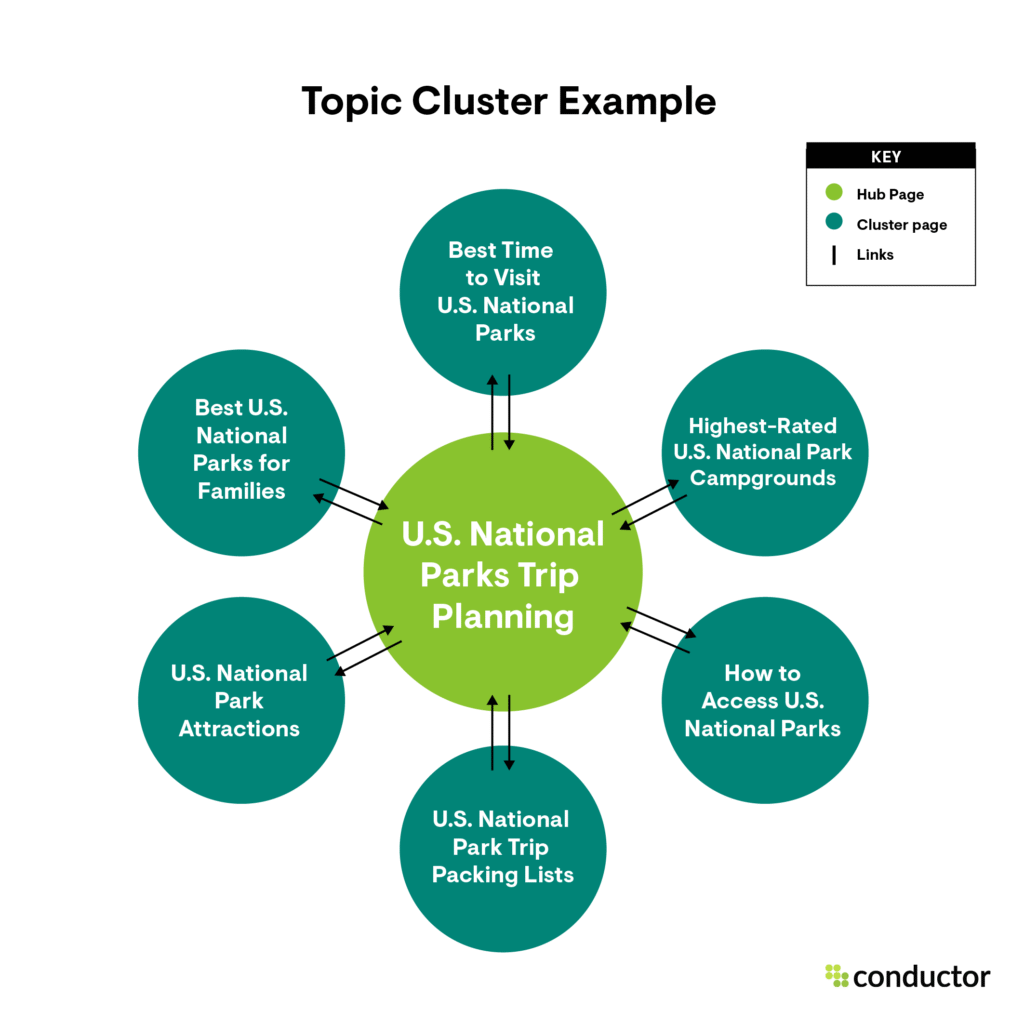
Real Example of a Content Cluster Strategy
Let’s consider an example for a Content Marketing website.
Pillar Page
Content Marketing Strategy Guide
• Content planning and strategy
• Blog SEO optimization
• Video marketing strategy
• Content distribution techniques
• Content repurposing methods
• AI tools for content creation
All articles link back to the pillar page and connect to each other where relevant.
This builds strong authority around the topic of content marketing.
Data and Statistics Supporting Content Clusters
Research shows that websites using structured content strategies perform significantly better in search results.
Key statistics include:
• Websites using topic clusters can increase organic traffic by up to 50% within one year.
• Long-form pillar pages attract three times more backlinks than average blog posts.
• Strong internal linking improves crawlability and indexing.
• Websites with strong topical authority rank for hundreds of related search queries.
These results highlight why content clusters are becoming the standard for modern SEO strategies.
Common Content Cluster Mistakes
Many websites attempt content clusters but fail due to structural mistakes.
Here are common issues to avoid.
Weak Pillar Pages
A pillar page must provide comprehensive coverage of the topic. Thin content will weaken the cluster.
Poor Internal Linking
Without proper internal links, search engines cannot understand the relationship between pages.
Random Topics
Cluster articles must be closely related to the pillar topic.
Keyword Cannibalization
Avoid targeting the same keyword across multiple articles.
Each cluster page should focus on a unique search intent.
How Content Clusters Improve Search Rankings
Content clusters improve SEO in several ways.
Stronger Topical Authority
Search engines recognize your website as an authority on a particular subject.
Better Crawling and Indexing
Internal links guide search engine bots through your content structure.
Higher Keyword Coverage
You can rank for many long-tail keywords instead of relying on a single keyword.
Improved User Experience
Visitors can easily navigate between related topics, increasing engagement and time on site.
FAQ – Content Cluster Strategy
What is the difference between a pillar page and a cluster page?
A pillar page covers a broad topic, while cluster pages focus on specific subtopics that support the pillar page.
How many cluster articles should a pillar page have?
Ideally, a pillar page should be supported by 8–20 cluster articles.
How long should a pillar page be?
A strong pillar page usually contains 3000–5000 words to fully cover the topic.
Do content clusters improve SEO rankings?
Yes. Content clusters help search engines understand topic relationships, which improves rankings and organic visibility.
Are content clusters still effective in 2026?
Yes. As search algorithms increasingly rely on semantic search and entity relationships, content clusters remain one of the most effective SEO strategies.
Final Thoughts
The future of SEO is not about publishing random articles. It is about building structured topic authority.
A well-planned Content Cluster Strategy allows websites to organize content, strengthen internal linking, and demonstrate expertise in a specific niche.
By combining pillar pages, supporting cluster articles, and strategic internal linking, businesses can build sustainable organic traffic and dominate search results in 2026 and beyond.